Living with long-term pain is exhausting in ways that are difficult to describe to anyone who hasn't felt it. Bodies that no longer feel reliable. Days planned around how the back might be. Small movements that quietly cost more than they should.
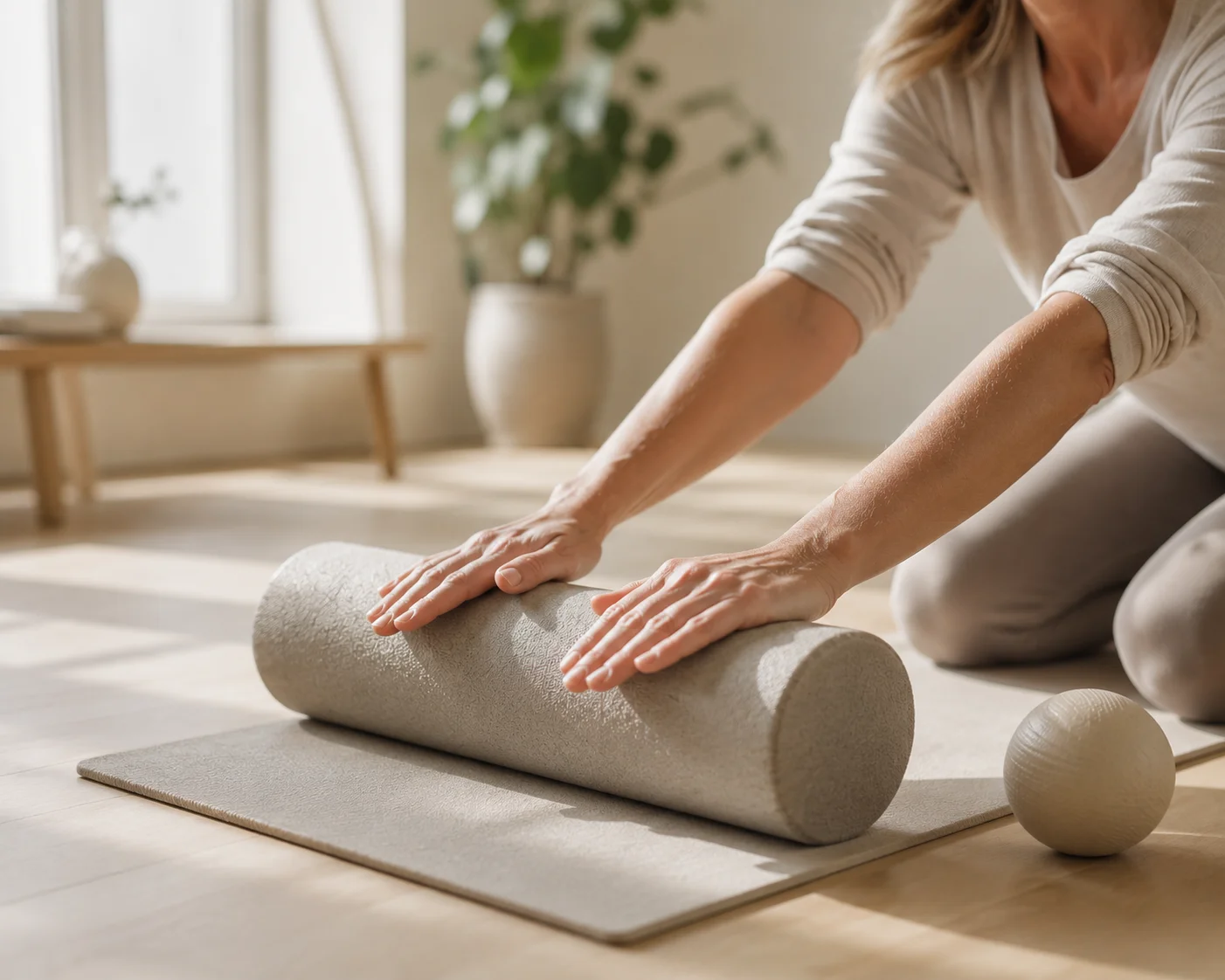
The MELT Method, short for Myofascial Energetic Length Technique, is a gentle self-care system developed by manual therapist Sue Hitzmann. It draws on techniques from physical therapy, massage and neuromuscular work, but it's done at home, with small foam rollers and soft therapy balls. The aim is to support the connective tissue of the body, ease accumulated tension and give the nervous system a chance to settle.
What MELT works with
MELT works with fascia, the web of connective tissue that runs through the body, wrapping muscles, organs and joints. Over time, repetitive movements, old injuries, stress and the simple accumulation of years can leave fascia feeling drier and tighter. That often shows up as stiffness, joint discomfort, postural changes and a more limited range of movement.
The work uses gentle pressure and mindful, small movements. Many people describe the experience as both unfamiliar and oddly familiar, the body doing something it had been quietly trying to do for a long time.
Who tends to find it helpful
MELT is often particularly supportive for people living with long-running pain, arthritis, fibromyalgia, lower back discomfort, the kind of stiffness that sets in after years at a desk. Athletes use it for recovery and movement quality. Many older adults find it useful for balance and flexibility, both of which matter for independence as the years go on. And for anyone whose week involves a lot of sitting, it can quietly undo some of the strain that builds without us noticing.
What a session looks like
A typical MELT practice lasts ten to twenty minutes. It doesn't require strength or flexibility. The movements are subtle. There's no aerobic demand. Most people can pick up the basics in a few sessions and continue at home.
Some MELT practitioners describe it as an "enabler" rather than a quick answer. Once the technique becomes familiar, it can be done anywhere, on a quiet morning at home, in a hotel room while travelling, in the small windows of a busy day.
A note on what it isn't
MELT isn't a substitute for medical care, and it's not a quick promise of any particular outcome. For some people it becomes a daily anchor. For others, an occasional support. It tends to sit comfortably alongside other approaches, physiotherapy, yoga, gentle strength work, walking.
"Many people describe the experience as both unfamiliar and oddly familiar, the body doing something it had been quietly trying to do for a long time."
If something here resonates, a trained MELT practitioner can be a gentle starting point, often through a small group class or a one-to-one session to get the basics. Welvow's directory includes MELT practitioners and other bodyworkers who work with people exploring more ease in long-term pain.
Find your practitionerLiving with pain is not the same as living without options. Small, gentle, consistent things often do more than the body expects.