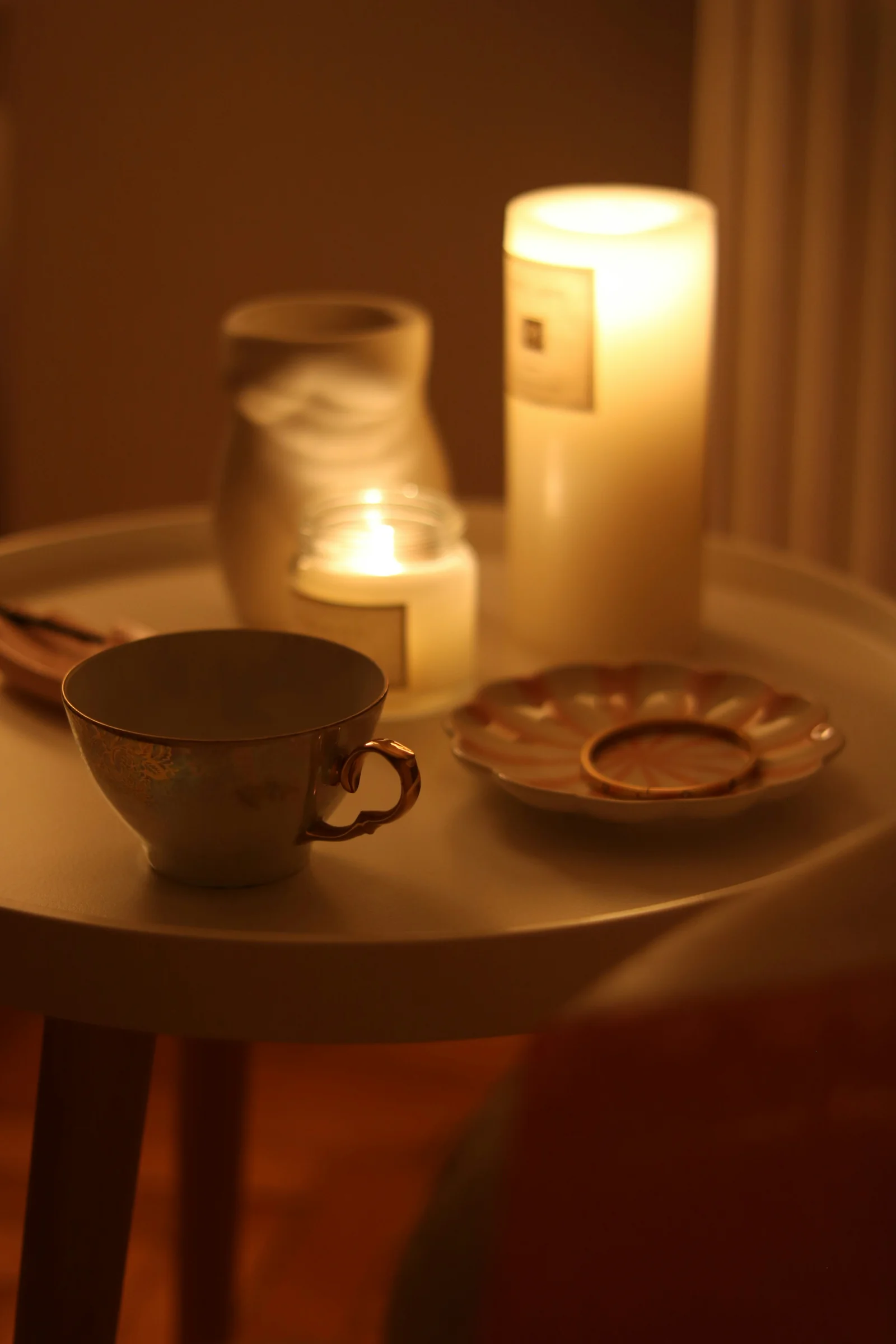
For many of us, the evening has become an extension of the day rather than a departure from it. The laptop stays open, the phone stays close, and the momentum of work simply continues – just in more comfortable clothes. It's understandable. The demands are real and the hours after dinner can feel like the only quiet time available. But this blurring of edges often costs more than it saves.
An evening ritual – however modest – is one of those small investments that many people find unexpectedly worthwhile. Not because it's productive in the conventional sense, but because it creates a genuine transition: a signal to the body and mind that the day is ending, and something else is beginning.
Why the transition matters
When we move directly from stimulation – screens, news, to-do lists, social media – into sleep, the mind often hasn't had the opportunity to process and settle. Many people notice this as the "busy brain at midnight" phenomenon: lying in bed, wide awake, running through the day or planning tomorrow. The evening is where that processing can happen, if we give it space.
It's also worth considering that the quality of the evening directly influences the quality of sleep – and the quality of sleep influences almost everything else. Rather than thinking of an evening routine as another thing to do, it might help to think of it as the container that makes everything else possible.
"A gentle evening isn't a luxury – it's the foundation the next day is built on."
Building something that actually works
The best evening routines tend to be ones that feel like a pleasure rather than a prescription. So rather than prescribing a specific set of steps, it could be more useful to ask: what already helps you feel settled in the evenings? What makes you feel more like yourself?
That said, there are a few things that many people find genuinely helpful as evening anchors. Reducing bright light exposure in the hour or two before bed – particularly blue light from screens – could be worth exploring if sleep feels elusive. Warm lamps instead of overhead lights, or even candles, can help signal a different mode to the body. It's a small change that many people find makes a noticeable difference.
A brief movement practice – nothing strenuous, perhaps just some light stretching or a short walk – can help shift the physical holding of the day. Many people carry tension in their shoulders, jaw, or hips without fully noticing until they pause and pay attention. Even ten minutes of gentle movement can feel restorative.
Something absorbing but not activating – a novel, a podcast, a craft, a conversation – can help shift the mind out of problem-solving mode. The key is that it's genuinely engaging rather than passive. Scrolling, by contrast, tends to keep the nervous system in a low-grade state of alertness that isn't particularly restful.
A simple closing ritual – writing down three things from the day, or a brief note of what's on your mind for tomorrow – can help the mind let go of things it might otherwise hold onto overnight. Many people find that externalising thoughts, even briefly, creates a sense of completeness.
On keeping it realistic
An evening routine doesn't need to be long, elaborate, or consistent every night. Some evenings will be chaotic; some will be social; some will simply call for the sofa and something easy. The intention isn't perfection – it's a gentle direction. Even one small act that signals "the day is done" can be enough to shift the quality of how the evening feels.
If the evenings feel persistently difficult to navigate – whether because sleep won't come, the mind won't settle, or the boundary between work and rest feels impossible to find – it could be worth exploring with a practitioner. Sleep coaches, counsellors, yoga teachers who specialise in restorative practice, and acupuncturists are all people who work with those exploring this area. Many people find that a few sessions creates a lasting shift.
Find your practitioner →The evenings are yours. They don't have to be particularly productive or impressive – they just have to feel like a small return to yourself.