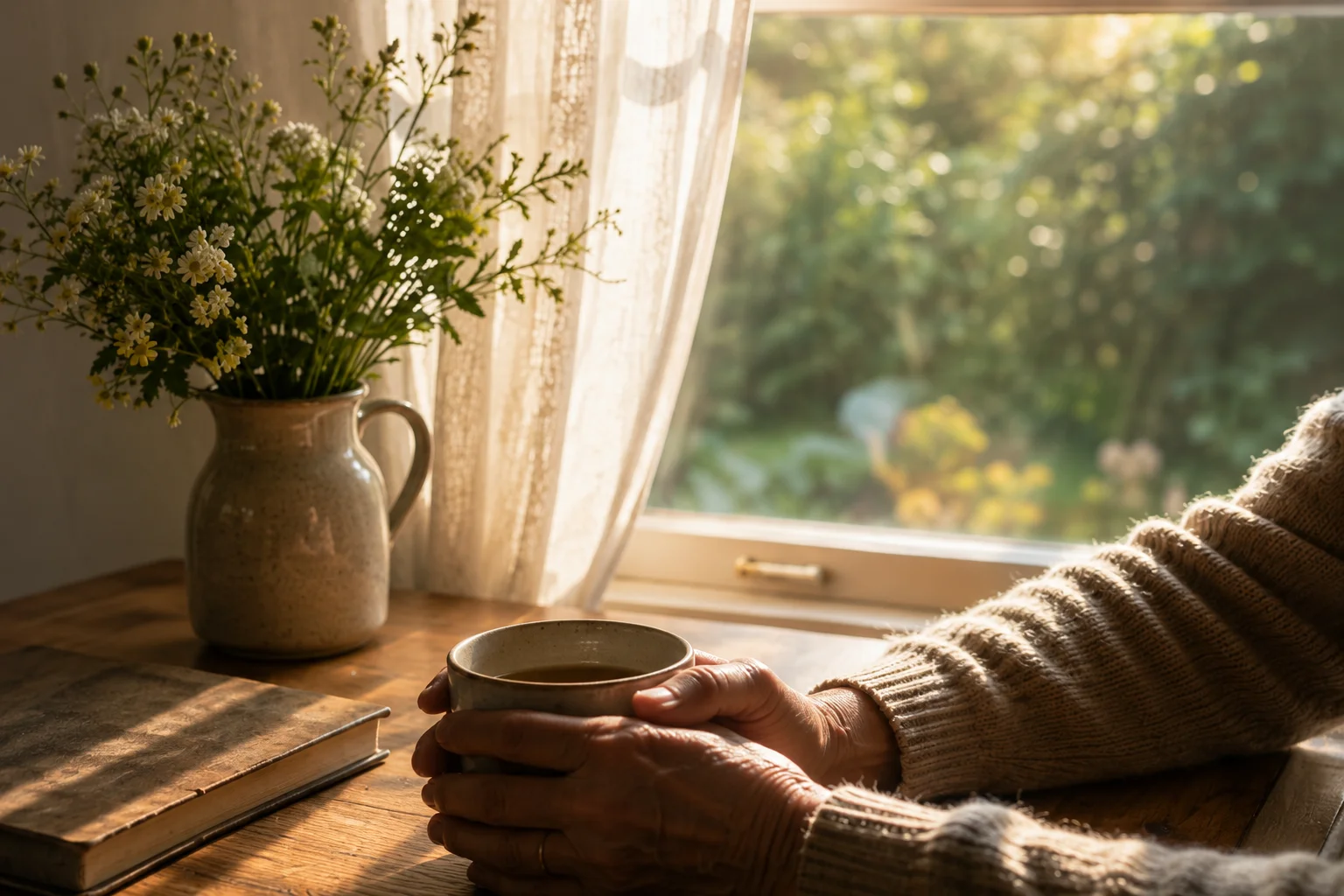
The cultural story of later life is one of loss, failing memory, weakening body, fading relevance. It is such a familiar shape that you can almost forget it is a story rather than a fact. For many people in their sixties, seventies, and beyond, the lived reality looks markedly different.
The Office for National Statistics has been measuring life satisfaction across age groups in the UK for over a decade. The pattern that consistently shows up is something close to a U-curve. People feel reasonably content in their twenties, dip through their thirties and forties, typically the years of most career and caregiving pressure, and rise again into their sixties and seventies, often peaking in wellbeing later than at any other point in life. Age UK's Index of Wellbeing in Later Life echoes the same finding. The decades that mainstream culture treats as a slow ending are, in many lives, the most settled.
This does not mean later life is uniformly easy. Losses gather. Friends become ill. Parents die. Bodies change. Some of these are real and worth acknowledging without pretending otherwise. But alongside the losses, something else opens, and that something is what this series is for.
What later life makes possible
The first thing that changes is time. For most adults, the middle decades are a long negotiation between work, money, children, parents, and the future. The structure of those years is borrowed, you live according to other people's schedules, other people's needs, the demands of a career you might or might not have chosen. In later life, by varying degrees, that scaffolding loosens. Time begins to belong to you in a way it has not before.
The second thing that changes is the question of who you are trying to impress. Many people find that the urgency to prove, perform, and compare, which animates so much of midlife, gradually quietens. There is still room to want things, to keep growing, to keep being interested. But the want shifts. It is less about being seen and more about what genuinely feeds you.
The body in its own rhythm
A lot of what wellness culture sells to older adults is anti-decline framing: stay strong, stay sharp, stay young. It is an exhausting frame and not a particularly accurate one. The body in later life is doing something more interesting than declining. It is settling into its own rhythm, one that may include walking more and running less, gentle strength rather than constant intensity, rest as a chosen practice rather than a guilty necessity.
Many people find that movement becomes more honest in later life. You move because it feels good, because it keeps the body easy in itself, because being outside is its own kind of nourishment. Walking, swimming, yoga, dancing in the kitchen, gardening, lifting groceries with attention, none of this needs to be optimised to count. The research on movement in later life is consistent: regular, varied movement supports cardiovascular health, balance, bone, mood, sleep, and cognition. But the more useful framing is not "do this to stay healthy." It is: this is what your body is asking for, and it will give you back what you give it.
The decades that mainstream culture treats as a slow ending are, in many lives, the most settled.
A different kind of attention
The third thing later life often offers is a recalibration of attention. When you are no longer running on the engine of ambition, you notice different things. The light coming through a particular window. The taste of a peach. A grandchild's expression when they are concentrating. A conversation that goes deep because there is time for it to. None of this is small. The wisdom traditions have always pointed at this, the quiet pleasures that the striving years skim over, and it turns out psychology backs them up. Savouring, gratitude, time spent in nature, and meaningful connection are all reliably linked to wellbeing in later life.
What this series is for
Welvow is here for the second half. Over the coming weeks, this series will explore the practical and emotional terrain of later life, retirement, eating for vitality, moving well, mental health, the changes after menopause, men's later years, and grandparenting when it arrives in its own time. None of it is about staying young. All of it is about being well, on your own terms, in the life you have now.
If something in this resonates and you would like a steadier guide alongside you, there are practitioners who work specifically with this stage of life. A counsellor or coach can help with the inner shifts, purpose, identity, what comes next. A nutritional therapist or movement teacher can support the body as it settles into the rhythm it wants. Welvow can help you find people in your area.
Find your practitionerLater life is not an ending dressed up as something else. It is its own beginning, with its own freedoms, and there is a great deal worth meeting it for.