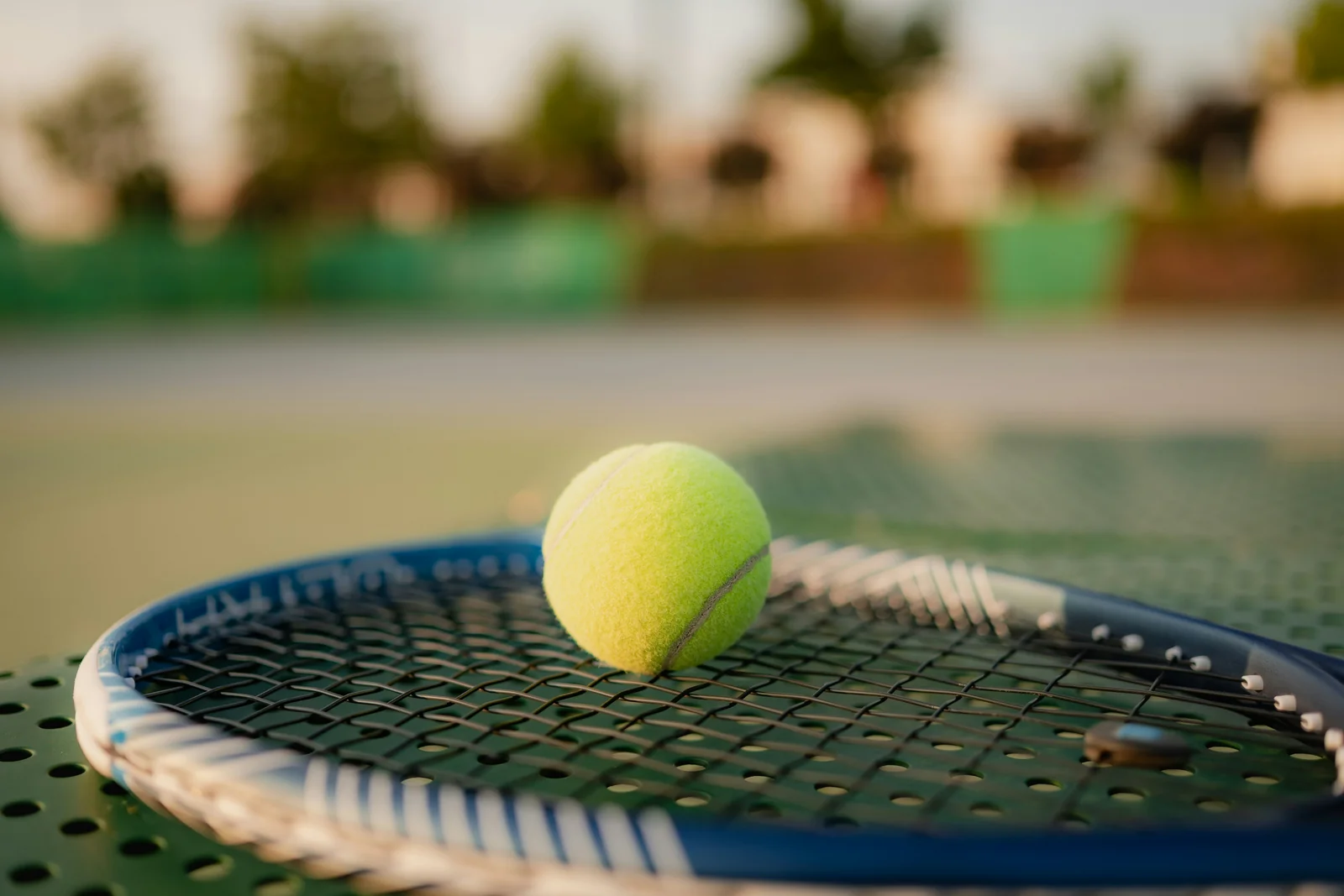
There is a particular kind of light on a local court on a Tuesday morning, the clay swept, the nets tight, a small group of people in their sixties and seventies waiting for a fourth. It is one of the quieter pleasures of later life, and quietly one of the more interesting forms of exercise.
Tennis has a reputation for being fast-paced and youthful, think of Wimbledon and the professional game's sprint-and-pivot intensity. In later life, the sport tends to look very different. Rallies are longer. The pace is more measured. Doubles becomes the format of choice. And many people find that this combination of movement, social contact and gentle challenge is exactly what an older body seems to ask for.
It is also one of the few activities that sits at the intersection of almost every kind of movement a body benefits from as it ages, aerobic, balance-based, rotational, cognitive, and layers in something often harder to find: people to do it with.
More than cardio
What makes tennis unusual, in movement terms, is how much it does at once. In the course of a friendly doubles match you are walking and jogging and occasionally sprinting a few steps. You are rotating through the spine, shifting weight across both legs, reaching overhead, bending slightly to receive a low ball. Your eyes are tracking a moving object and your brain is anticipating trajectory. None of this is dramatic, but together it is a surprisingly complete form of physical activity.
There is also the gentle weight-bearing that happens every time you push off a foot to move for a ball. Impact-loading along varied lines of effort is something many older bodies find useful to have in the weekly mix, particularly where bone density is a consideration. And the coordination element, eye, hand, foot, racket, all working together, is exactly the kind of cognitive input that seems to matter more as we age.
"Tennis sits at the intersection of almost every kind of movement a body benefits from as it ages, and layers in something often harder to find: people to do it with."
What the research tends to suggest
A large Danish study, the Copenhagen City Heart Study, has been following thousands of people for several decades, looking at the relationship between different sports and life expectancy. Racket sports, tennis included, were associated with the largest gain of any activity in the study: around nine years. The researchers were careful about claiming cause, but their reading was that the social nature of racket sports, the friendships, the weekly commitment, the sense of belonging to a group, was a significant part of what seemed to matter.
The NHS recommends that adults over 65 aim for some form of physical activity every day, with a combination of moderate-intensity aerobic work, muscle strengthening, and activities that challenge balance. Tennis quietly delivers on all three, without anyone needing to think of it as exercise.
Starting (or returning) in later life
For those who played in their twenties or thirties and stopped, returning can feel awkward for about three weeks and then rather delightful. The body remembers more than you'd expect, and the game has grown kinder, coaching courts are full of people in their fifties, sixties and seventies taking it back up.
For complete beginners, adult coaching groups exist at most clubs, and many run specific sessions for returners and older adults. The Lawn Tennis Association has also been developing a Walking Tennis programme, which slows the game right down and removes the running element, a gentle way in for people who'd love the social side but would rather not chase balls. Padel, a smaller-court cousin of tennis, is another option many people find easier on the knees.
Looking after your body
Two practical things help keep tennis pleasurable rather than punishing as the body ages. The first is warming up properly, five or ten minutes of gentle mobility before stepping on court, rather than straight in off the car seat. The second is getting the racket right: grip size and weight matter more than most people realise, and a grip that is slightly too small is a common source of elbow discomfort.
Tennis elbow is the most common niggle of the sport, and it is worth reading about separately if it is something you are starting to feel. A sports massage therapist or physiotherapist with a sports background can help if something starts to niggle, the sooner, generally, the easier it is to address.
Hydration, a rest day between sessions, and a bit of stretching afterwards go a surprisingly long way. Many older tennis players describe the post-match cup of tea and gentle wander as the second-best part of the morning.
If you're picking the game back up and something niggles, a shoulder, an elbow, a hamstring, it could be worth a conversation with a physiotherapist or sports massage therapist. Many people find that one or two sessions early on makes the difference between a small niggle and a longer layoff.
Find your practitionerTaking up a racket later in life can feel surprisingly low-stakes once the first few sessions are behind you. For many people, it becomes less about the game itself and more about the rhythm of it, the Tuesday morning, the small group, the moving body.