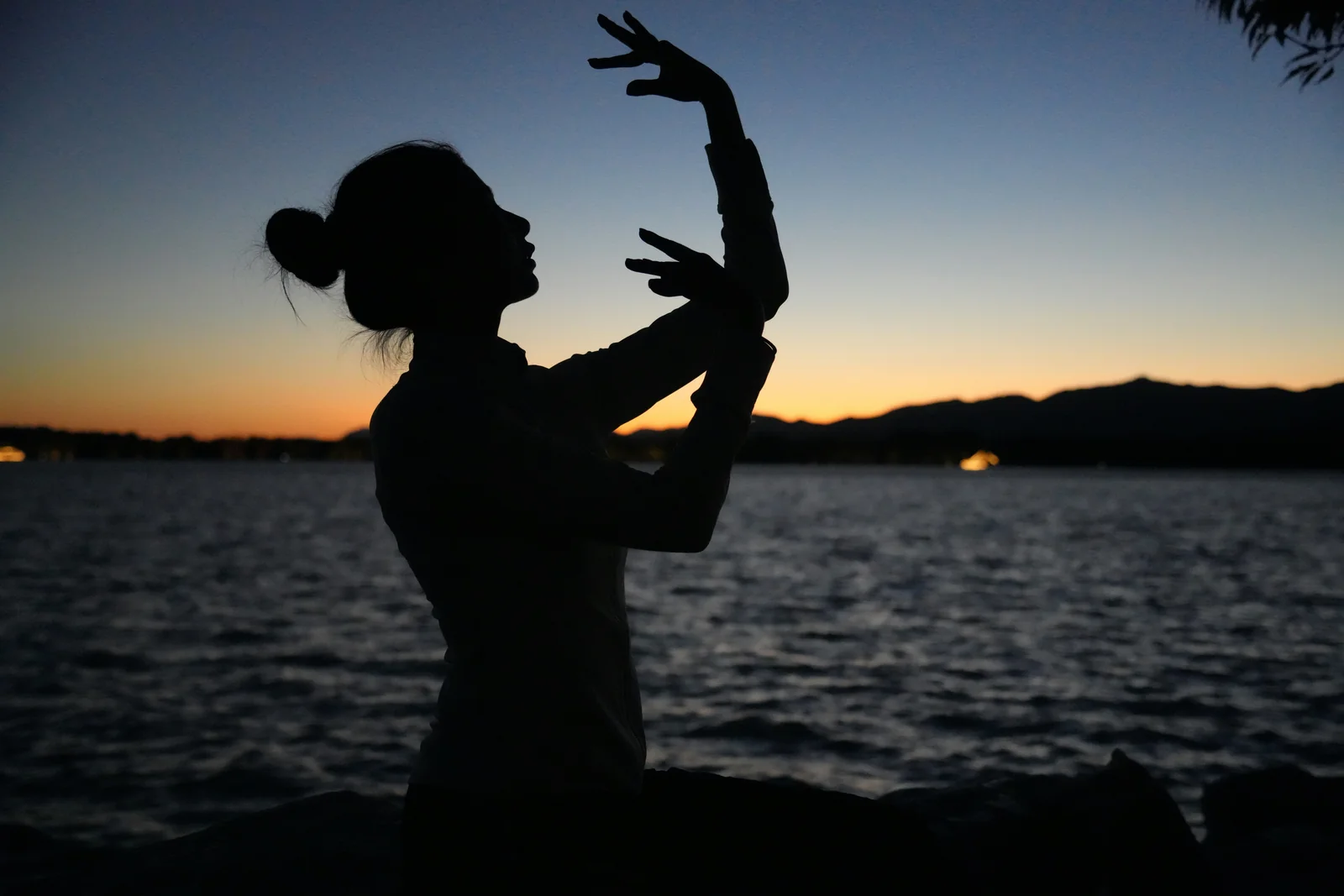
Qigong is one of the oldest movement practices we know of, over four thousand years old, woven through the same lineage of Chinese thought that gave us acupuncture and traditional Chinese medicine. The name itself means, roughly, working with energy. In practice, it looks gentle: simple postures, slow flowing movements, and a quiet attention to the breath.
What it offers tends to surprise people. Many find Qigong sits somewhere between exercise and meditation, softer than yoga, slower than a workout, and accessible at almost any age or level of fitness. You don't need to be flexible. You don't need to be strong. You don't need a mat, a studio, or particular clothing. You just need a small patch of room and a few minutes.
What Qigong actually feels like
Most Qigong sequences are circular and unhurried. Arms float and fall. The body shifts its weight. The breath lengthens. Many people describe the practice as a kind of moving meditation, the body in soft motion, the mind quietly anchored to it.
In Chinese thought, Qigong is said to encourage the smooth flow of Qi, or life energy, through the body's meridians. You don't have to subscribe to that framework to feel something happen. Many people simply notice that they leave a session standing a little taller, breathing a little deeper, and feeling more settled in their own skin than when they arrived.
What people often notice
The benefits people report from a regular Qigong practice tend to overlap with what the NHS notes about its close relative, tai chi: improved balance, better sleep, eased stress, gentler breathing, and more steadiness through the body as it ages. Many find the cognitive quietness of the practice as useful as the physical movement, a chance to step out of mental noise without having to sit still in silence.
It's also unusually inclusive. Qigong can be practised standing, seated, or even from a wheelchair. Many people living with chronic conditions, fatigue, joint pain, long-term illness, find the practice gentle enough to be sustainable when other forms of exercise feel too much.
"I describe Qigong as a moving meditation, calming the nervous system, allowing the breath to settle, and giving the body permission to soften."
One practitioner's experience
Jane Green, a Qigong teacher in Beaconsfield, came to the practice while living with multiple sclerosis. Her fatigue had become so significant that everyday life felt exhausting and her usual exercise routine was no longer accessible.
She started a daily Qigong practice and noticed something different. As she put it: "I had more energy, felt more confident and positive, and was able to say 'yes' to more things." Where other forms of exercise had often left her feeling worse, Qigong felt sustaining. Over time she returned to work, to socialising, and to a quality of life she'd worried she'd lost. Qigong taught her, she says, to listen to her body, to recognise when movement, rather than rest, was the kinder choice on a difficult day.
Jane's experience isn't a promise of what Qigong will do for anyone else. It's simply one person's story of finding a practice that fitted around the realities of her life. That, in many ways, is the quiet appeal of Qigong: it asks very little, and meets people where they are.
If Qigong sounds like something you'd like to try, a qualified Qigong teacher can guide you through the basics in a way that suits your body and your circumstances. Many teachers offer beginner-friendly classes online and in person, often in small group settings where there's no pressure to keep up.
Find your practitionerThe longer I spend with Qigong, the more I come to believe it offers something we are gently starved of in modern life: a practice that doesn't ask us to push, perform, or improve. It just asks us to arrive, breathe, and move, and lets the rest take care of itself.