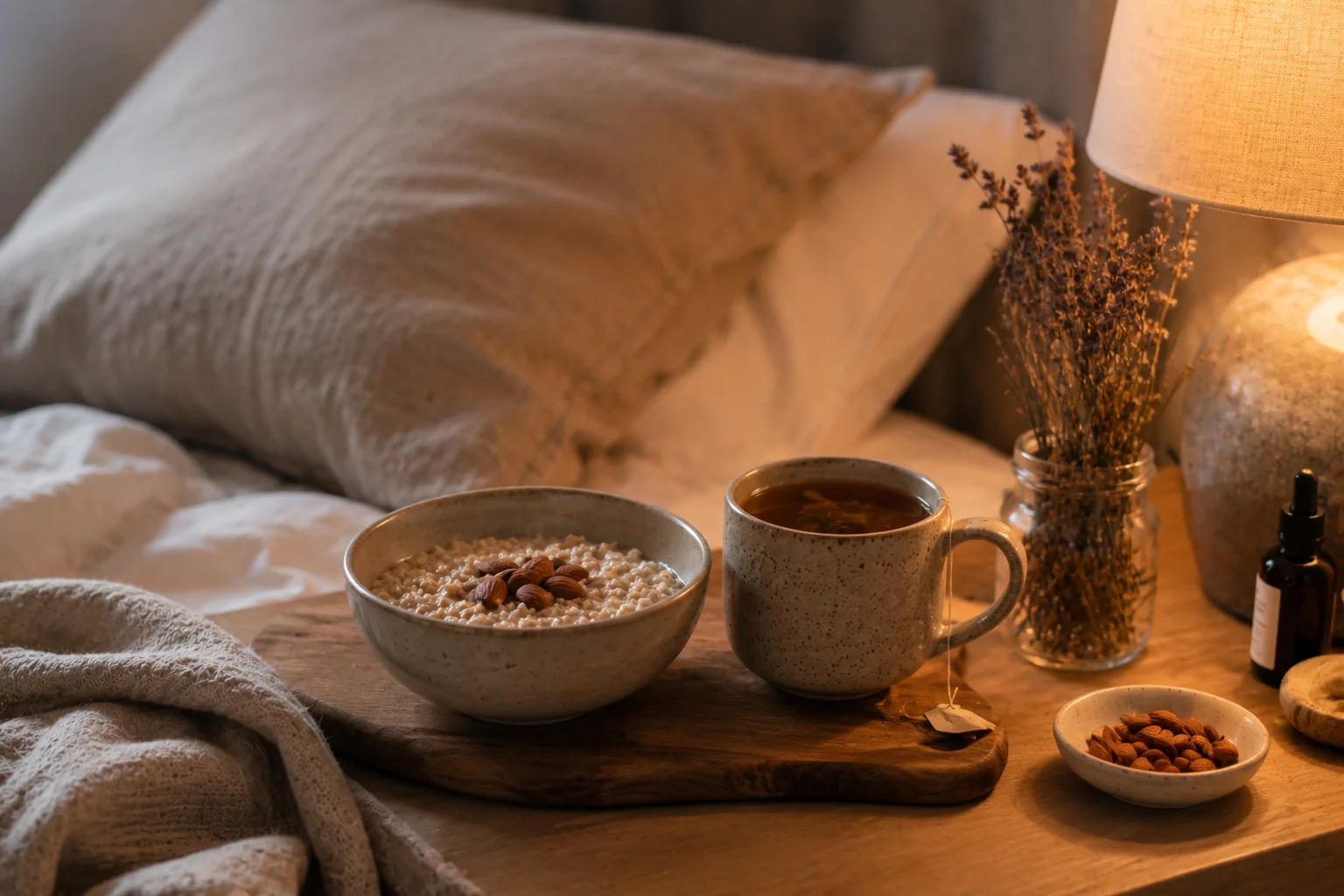
Good sleep is one of the foundations of wellbeing, and according to recent research, around one in five people in the UK aren't getting enough of it. The encouraging part is that quite a lot of what shapes a night's sleep happens long before you reach the bedroom. What we eat, when we eat it, and the rhythm of the day all play a quiet role.
Be thoughtful about what, and when, you eat
Your internal body clock responds to regular mealtimes. Eating at wildly different hours each day can leave it confused. A few gentle anchors to keep in mind:
- Watch the caffeine and nicotine. Caffeine can affect sleep up to ten to twelve hours after the last cup. Nicotine is also a stimulant. For many people, an afternoon cut-off helps more than they expect.
- Avoid big meals close to bedtime. Aim to finish dinner at least two hours before sleep, and go gently on heavy, rich, spicy or acidic foods in the evening if they tend to leave you uncomfortable.
- Be gentle with alcohol. A nightcap may feel like it helps you nod off, but it tends to fragment sleep later in the night.
- Keep liquids steady through the day. Plenty of water during daylight hours, less right before bed. Dehydration can affect sleep too, so it's about pacing rather than restricting.
- Mind the sugar. A diet rich in refined carbs and sugary foods can trigger blood sugar dips at night, which often shows up as wakefulness around 2 or 3 in the morning.
Sleep starts in the morning
The body's twenty-four-hour rhythm is set in motion early. A breakfast that includes protein and fibre helps steady blood sugar and supports a more even-keeled afternoon, which in turn tends to mean a calmer wind-down. Add some natural daylight in the first hour or so of being awake, even briefly, and the circadian rhythm gets the gentle cue it's looking for.
Foods that quietly support rest
A few foods come up again and again in the research on sleep:
- Bananas. Magnesium and potassium to relax muscles, plus tryptophan, an amino acid the body uses to make serotonin and melatonin, both involved in sleep.
- Oats. Naturally contain melatonin and tryptophan. Often easier on the stomach than something richer in the evening.
- Kiwi fruit. Studies suggest eating two kiwis an hour before bed regularly can support easier falling asleep over time.
- Almonds, pistachios and walnuts. Magnesium, healthy fats and a small amount of melatonin. A small handful is enough.
- Tart cherry juice. Particularly Montmorency cherries, which are unusually high in melatonin.
- Sweet potato. A gentle source of magnesium and slow-release carbohydrate that can help the body settle in the evening.
A simple evening pairing many people enjoy: a small portion of protein with some wholegrain carbohydrate. Chicken with brown rice, or yoghurt with oats and a few figs. The combination helps tryptophan reach the brain more effectively.
Herbal teas for the wind-down
A warm cup in the hour before bed signals to the body that the day is winding down. Many people find one of these herbs supportive:
- Chamomile
- Lemon balm
- Lavender
- Passionflower
- Valerian root
If you're on any medication, do check with your GP or pharmacist before adding regular herbal supplements, some can interact in ways that are worth knowing about.
Let the light in
Sleep is shaped almost as much by daylight as by the dark. Bright morning light on the face for even a few minutes, coffee by a sunny window, a short walk, breakfast outside in summer, quietly sets the circadian clock. Time outside through the day matters too. In winter, a light therapy box can be a useful stand-in when natural sunlight is in short supply.
"A good night's sleep usually starts in the morning."
If sleep has been a longer-running puzzle, a nutritional therapist can be a gentle starting point, they often work with people to look at the broader picture of food, blood sugar, stress and rest together. Welvow's directory includes nutritional therapists and practitioners who work with people exploring better sleep.
Find your practitionerSleep tends to respond to a steady rhythm rather than any single magic ingredient. A regular bedtime, daylight in the morning, food that supports the body, and a wind-down you actually enjoy, those small steady things often do more than any single change.