Most of the food advice aimed at later life falls into one of two camps. The first is the supplement-and-superfood pitch, drink this, take this, reverse the years. The second is the bland reduction, eat sensibly, less salt, less butter, less pleasure. Neither is much use, and neither maps onto what the body in this stage of life is actually asking for.
What the body asks for is more interesting than either picture suggests. After about sixty, several quiet shifts happen at once. Muscle becomes a little harder to maintain. The gut's bacterial diversity tends to thin, which affects digestion and mood. Thirst signals dim, so dehydration creeps in unnoticed. Bone metabolism slows. The capacity to absorb certain nutrients, B12, vitamin D, calcium, becomes less efficient. None of this is bad news. It is just the body wanting different things than it wanted at thirty. Once you know what those things are, eating well becomes a great deal simpler.
Protein, and why it now matters more
The most important shift in later-life nutrition is also the most under-discussed. Muscle gradually thins from around the fifth decade onwards, a process called sarcopenia. It is not a disease; it is a slow drift. But muscle is what keeps you balanced, strong, independent, and metabolically steady. Keeping it requires two things: regular movement (especially strength work) and more protein than mainstream eating tends to provide.
The British Dietetic Association and most international guidelines now recommend that adults over sixty aim for around 1.0 to 1.2 grams of protein per kilogram of body weight per day, meaningfully more than the 0.8 grams suggested for younger adults. For someone weighing seventy kilograms, that is around seventy to eighty-five grams a day. Distributed evenly: a palm-sized portion at each meal. Fish, eggs, dairy, lean meat, beans, lentils, tofu, tempeh, Greek yoghurt, cottage cheese, there is plenty to choose from. The point is not which foods. It is that protein needs to show up at each meal, not only at dinner.
Bone, calcium, vitamin D
Bone is also asking for attention. Calcium intake matters, but it is vitamin D that has the most reliable effect on whether bone keeps its mineral density, and the UK is well-documented as a vitamin D-poor country, particularly in winter. The NHS recommends that everyone in the UK consider a daily 10 microgram vitamin D supplement between October and March, and people over sixty-five often benefit from taking it year-round. Calcium-rich foods, dairy, leafy greens, sardines with bones, fortified plant milks, sit alongside it. Weight-bearing movement (walking counts, strength training counts) does at least as much for bone as anything you eat.
Gut, fibre, fermented foods
The gut microbiome, the trillions of bacteria that live in the digestive tract, tends to lose diversity in later life. Lower diversity is associated with poorer digestion, more inflammation, and lower mood. What helps it is the same thing that helps it at any age, but it matters more here: a wide variety of plants (the often-cited target is thirty different plant foods a week, herbs, spices, nuts and seeds all count), plenty of fibre, and a small daily dose of something fermented. Kefir, live yoghurt, sauerkraut, kimchi, miso. None of it has to be every day; what matters is variety and consistency over time.
The body in later life is not asking for less. It is asking for different.
Hydration, quietly important
One of the smaller but more reliable shifts in later life is that the thirst signal weakens. You can be dehydrated without registering it as thirst. This is worth knowing because mild ongoing dehydration is linked to lower energy, more constipation, headaches, and reduced mental sharpness. The answer is not dramatic, most people need around 1.5 to 2 litres a day, including from tea, soup, and watery foods. A glass with each meal and a glass between meals is most of the way there.
The anti-inflammatory frame
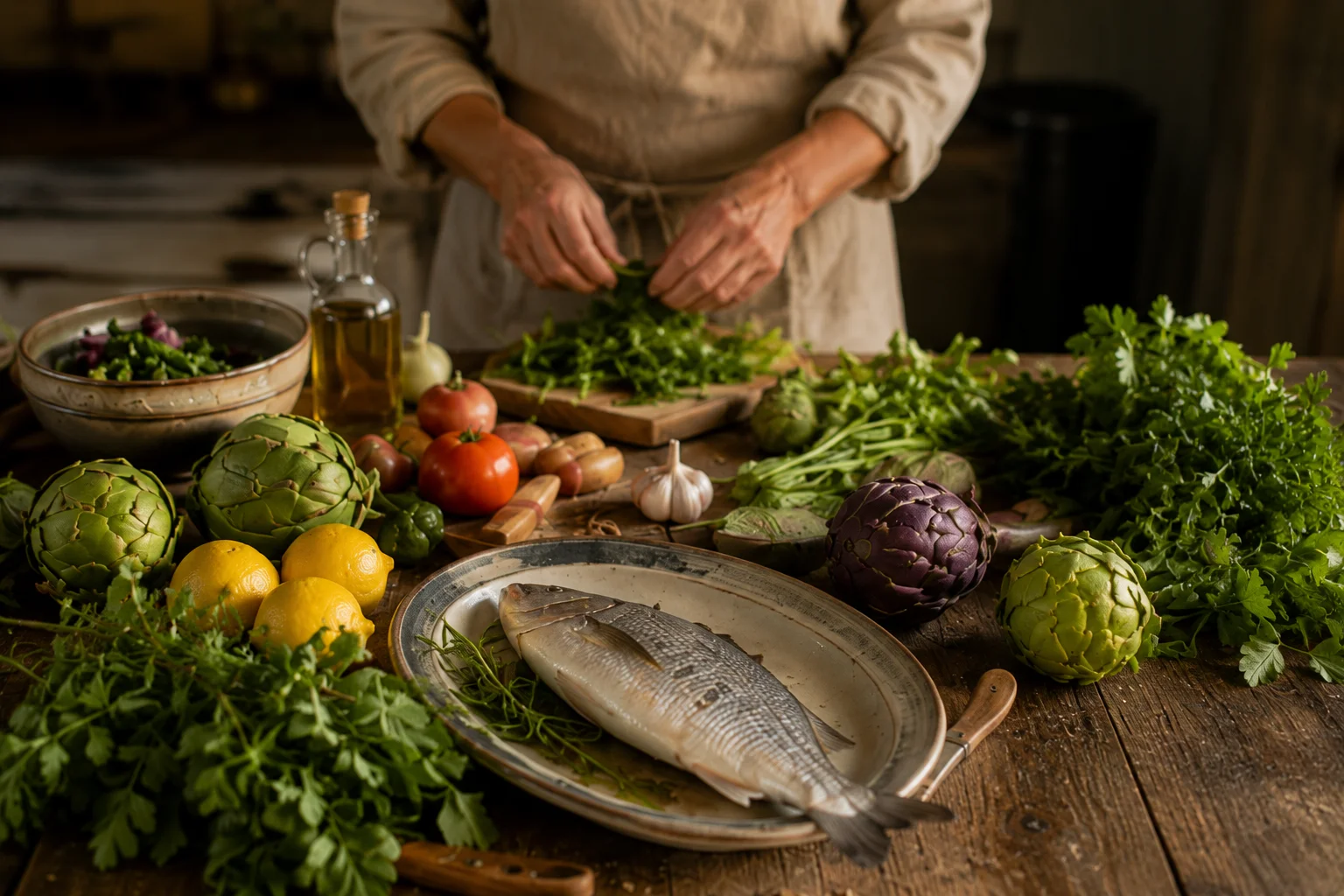
Most of what serves later-life wellbeing converges on a pattern researchers sometimes call the Mediterranean-style way of eating: plenty of vegetables and fruit, regular oily fish, olive oil rather than vegetable oils, nuts and seeds, beans and lentils, wholegrains, fermented foods, less ultra-processed food, less alcohol. The evidence behind this pattern is unusually strong, it is linked with cardiovascular wellbeing, brain wellbeing, gut wellbeing, and mood, and the framing is generous rather than restrictive. The instruction is "more of this," not "less of that."
Cooking at home, eating with company when possible, sitting at a table rather than in front of a screen, none of these are nutrients. But they shape how food lands in the body, and people who pay attention to them tend to feel better than people who do not.
A nutritional therapist can help you build a way of eating that suits your tastes, your life, and what your body is actually asking for now, without the overwhelm of generic advice. Welvow's directory includes nutritional therapists who work specifically with people in this stage of life.
Find your practitionerEating well in your later years is not about restriction or anti-ageing claims. It is about giving the body what it is now asking for, more protein, more colour, more fibre, more water, more company at the table.