Inflammation has become one of the biggest wellness conversations of our time, and for a reason. Researchers increasingly recognise that chronic, low-grade inflammation sits underneath many modern health challenges, from cardiovascular conditions and arthritis to changes in blood sugar regulation and the way the immune system responds.
But what is inflammation, really? And how can what we eat make a difference?
The difference between acute and chronic inflammation
Inflammation is part of the body's natural ability to look after itself. When you cut your finger or catch a cold, the immune system triggers an inflammatory response to support repair and recovery. That's acute inflammation, and it's essential.
The picture changes when inflammation becomes long-running, often due to a steady combination of low-quality food, ongoing stress, poor sleep and other everyday pressures. This low-grade, chronic state can quietly affect cells and tissues, hormones, and the way the immune system regulates itself. Over time, it's been linked to a wide range of long-term conditions.
What we eat sends signals
Every meal sends information to the body's cells. Some foods seem to cool inflammation; others can quietly fan it. An anti-inflammatory approach to eating leans towards foods rich in antioxidants, fibre, healthy fats and the wider range of nutrients the body uses to restore balance.
Some gentle guiding principles:
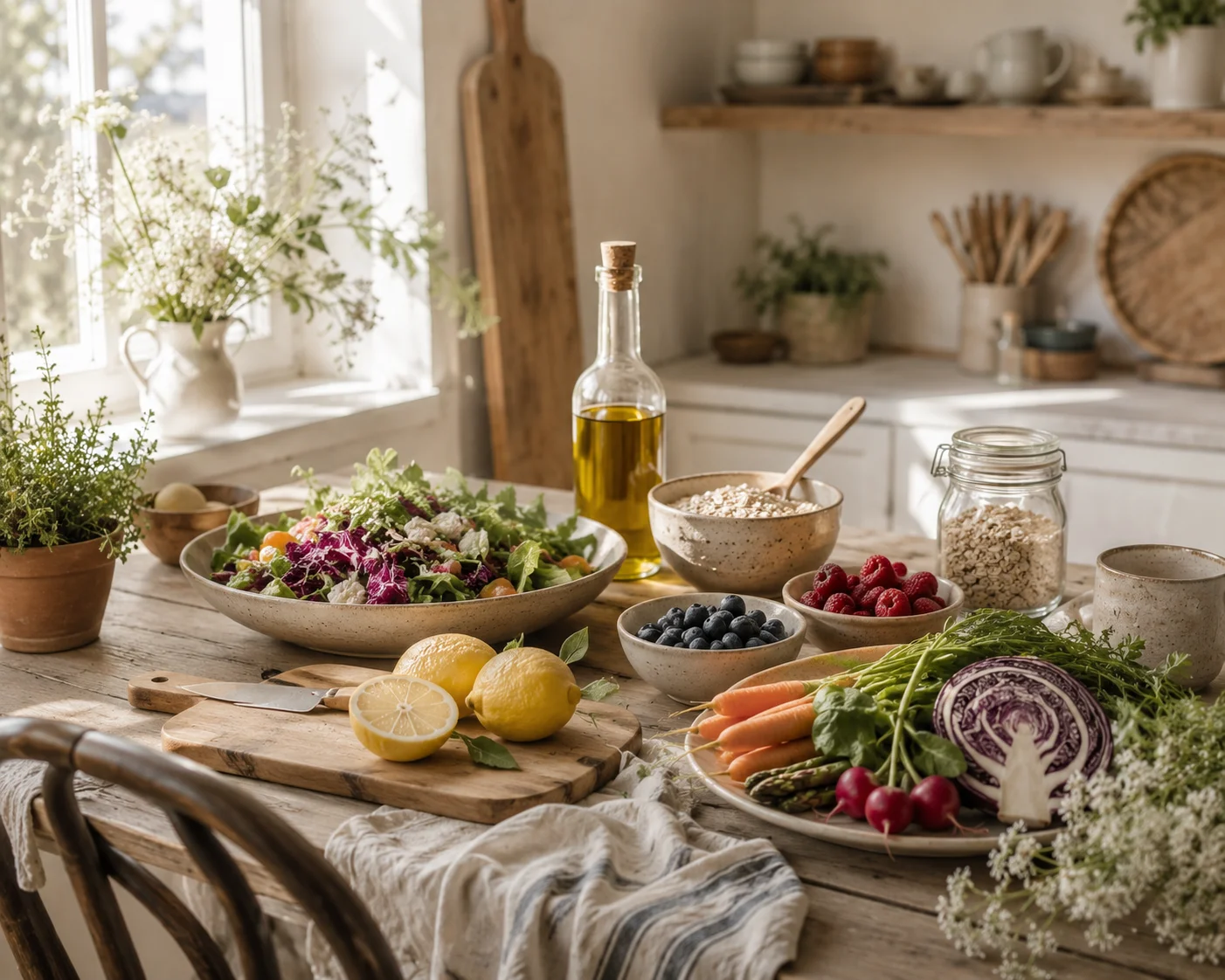
- Plenty of vegetables and fruit, across the colour spectrum
- Oily fish, flaxseeds and walnuts for omega-3 fatty acids
- Wholegrains, oats, brown rice, quinoa, over refined carbohydrates
- Anti-inflammatory herbs and spices like turmeric, ginger and garlic
- Less reliance on heavily processed foods and refined sugars
A handful of standout foods
Some foods come up again and again in the conversation about cooling inflammation:
- Leafy greens, spinach, kale and chard, rich in antioxidants and vitamins A, C and K.
- Berries, particularly blueberries, with their colourful plant compounds linked to cellular support.
- Oily fish, salmon, mackerel and sardines, for their omega-3 content.
- Beetroot, the deep red colour comes from betalains, gentle plant antioxidants.
- Walnuts and flaxseeds, plant sources of omega-3s, good in porridge or a salad.
- Turmeric and ginger, long used in traditional kitchens; useful in soups, dressings and warm drinks.
- Bone broth, naturally rich in collagen and minerals, often supportive of gut and joint comfort.
Foods worth easing back on
A few categories tend to be more inflammatory if they sit at the centre of the diet:
- Refined carbohydrates, white bread, pastries, white pasta
- Sugary foods and drinks
- Highly processed and fried foods
- Trans fats and excessive saturated fats
None of these need to be eliminated entirely. The shift that tends to matter most is what sits at the centre of your week, not what appears occasionally at the edges.
An anti-inflammatory day on a plate
Breakfast. Porridge with blueberries and a spoonful of yoghurt.
Lunch. Tuna or salmon salad on wholegrain bread, with a side of roasted vegetables.
Snack. A small handful of walnuts and a square of dark chocolate.
Dinner. Salmon or turkey with brown rice and a generous mixed salad. Stewed apple with cinnamon to finish.
A pattern, not a prescription, proof that nourishing food can be both gentle and satisfying.
The longer view
Chronic inflammation doesn't arrive overnight, and it doesn't ease overnight either. Through consistent, gradual changes to what's on the plate, the body has a real capacity to settle back towards balance. Energy, comfort and the way the immune system responds often shift quietly along with it.
"What sits at the centre of your week tends to matter more than what appears occasionally at the edges."
If you live with a long-term inflammatory condition or simply want to support your wellbeing through food, a registered nutritional therapist can be a gentle starting point, particularly for putting together an approach that fits your life. Welvow's directory includes nutritional therapists who work with people exploring anti-inflammatory eating and gut health.
Find your practitionerSmall, steady shifts in what's on the plate tend to do more than any single dramatic change. Wherever you're starting from, that's a kind place to begin.