Every healing tradition has its summer herbs – plants that cool, calm, and restore. In the UK's herbal tradition, the meadows and hedgerows of summer offer elderflower, lemon balm, lavender, and rose. In TCM, summer herbs focus on clearing heat, nourishing Heart Yin, and calming the Shen (spirit/mind). Together, these traditions offer a practical and genuinely beautiful toolkit for the season.
Western Summer Herbs
Lemon balm (Melissa officinalis) is one of the most useful and well-researched herbs for summer. It has a gentle calming effect on the nervous system – modestly supported by clinical research – and may help reduce the anxiety, sleep disturbance, and restlessness that summer heat can amplify. It's cooling in nature, pleasant as a tea (fresh or dried), and very well tolerated. Lemon balm makes an excellent iced tea in summer – brew it strongly, cool, and add cucumber and mint. It's also one of the herbs most frequently used for the Heart in the Western herbal tradition, which gives it a particular resonance with the TCM summer framework.
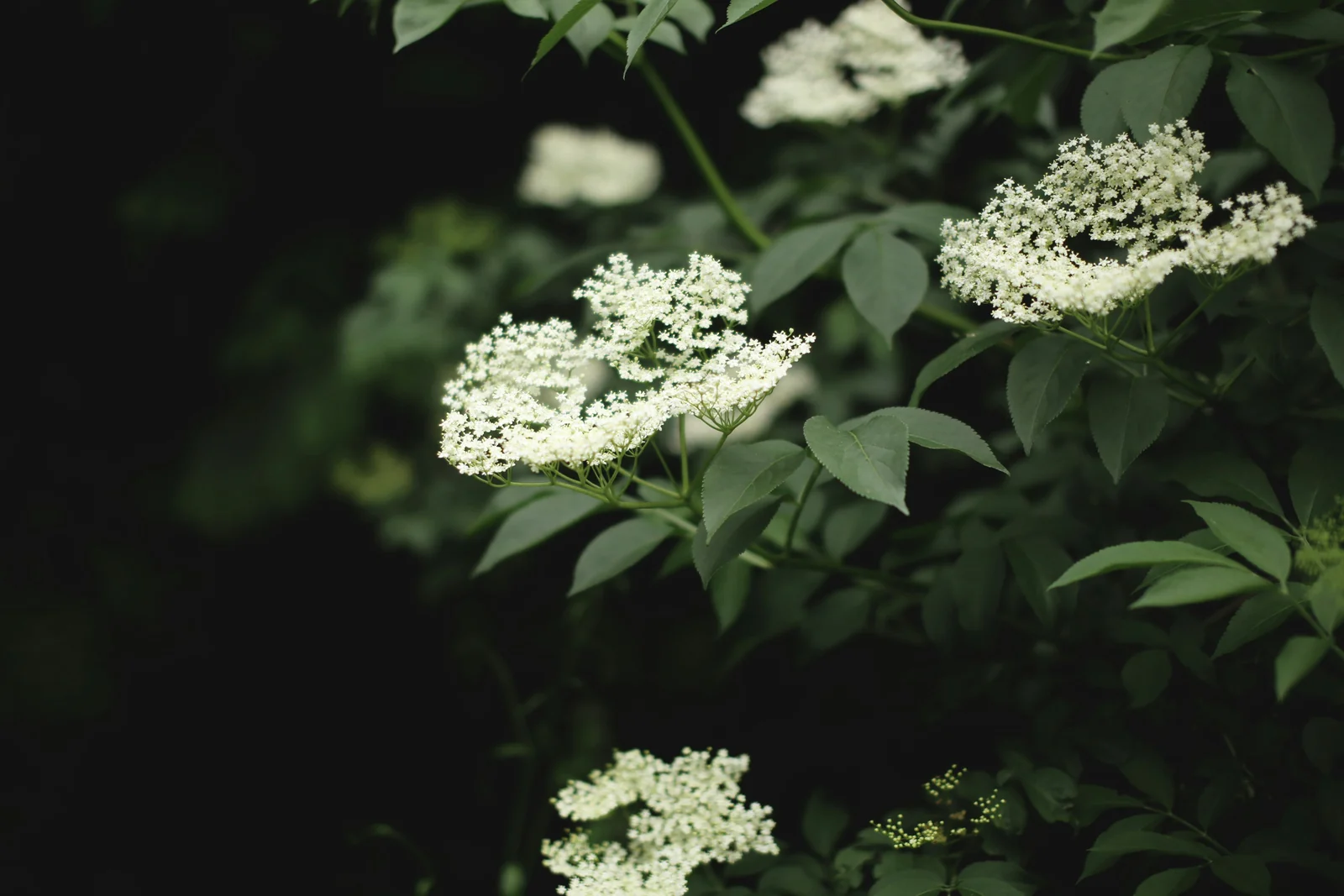
Elderflower (Sambucus nigra) is the quintessential British summer herb. Elderflower tea or cordial (the real thing, made from fresh blossoms – not the commercial variety laden with sugar) has a gently cooling, diaphoretic (mild sweat-promoting) action, which helps the body regulate its temperature more efficiently. In Western herbalism, elderflower is also used for upper respiratory complaints, sinusitis, and hayfever – all of which can flare in summer. Fresh elderflower infusions in early summer, before the flowers have passed, are among the season's most delightful remedies.
Lavender (Lavandula angustifolia) is calming, cooling, and specifically useful for the summer symptoms of anxiety, overheating, headaches, and sleep difficulty. A few drops of lavender essential oil on the pillow or temples may help ease the heat-induced insomnia that many people experience in warm months. Lavender tea – made from dried flowers – has a gentle sedative and anxiolytic (anxiety-reducing) quality. In the Western herbal tradition it is considered a Heart herb, bringing calm and spaciousness where there is agitation.
Rose (Rosa species) is cooling, heart-opening, and deeply nourishing in both Western and TCM herbal traditions. Rose petals and rosehips contain vitamin C, bioflavonoids, and gentle astringent compounds. Rose water or rose petal tea is a traditional summer cooling drink across many cultures – Persian, Ayurvedic, and European. In TCM, rose petals (Mei Gui Hua) are used to move Liver Qi and nourish the Blood, while also having a gentle calming action on the Heart.
Chamomile (Matricaria chamomilla) is anti-inflammatory, gently sedative, and cooling in action. Summer-specific uses include helping with heat-aggravated digestive complaints, managing the sleep disruption of hot nights, and calming skin reactions from sun exposure (both topically as a cool compress, and internally as tea).
TCM Summer Herbs
Lian Zi (Lotus seed) is one of the classic TCM herbs for the Heart in summer. It is used to calm the Shen, address restlessness, anxiety, palpitations, and poor sleep – all Heart-related symptoms that summer can amplify. Lotus seeds are nourishing rather than strongly medicinal and can be eaten cooked in porridge, in sweet soups, or prepared as a simple tea. They are sweet and slightly astringent in nature and are considered particularly supportive of those who feel emotionally depleted or anxious through the summer months.
Bai He (Lily bulb) is used in TCM to nourish Heart and Lung Yin, cool the body, and calm the mind. It is particularly recommended when summer heat has left a person feeling dry, restless, and emotionally raw. Lily bulb can be cooked in soups, congee, or steamed with a little honey as a simple remedy.
Suan Zao Ren (Sour Jujube Seed) is one of the most used TCM herbs for insomnia and Heart disturbance. It nourishes Heart Yin and Blood, calms the Shen, and is specifically indicated for the kind of restless, anxious insomnia that summer heat often generates. Available as a supplement or in traditional TCM formulas.
Lu Gen (Reed rhizome) is a strongly cooling, thirst-quenching herb used in TCM specifically to clear summer heat from the Stomach and Lung and generate body fluids. A simple decoction is traditionally taken during heatwaves. Fresh reed root is harder to source in the UK, but it appears in several TCM cooling formulas.
He Ye (Lotus leaf) is used in TCM to clear summer heat, dispel Dampness, and lift the clear yang energy of the mind and body. Lotus leaf tea is a popular summer drink across China – cooling, mildly diuretic, and thought to help with the foggy, sluggish quality that intense summer heat can produce.
Simple Summer Herbal Practices
- Lemon balm and mint iced tea – brew strongly, cool, add sliced cucumber; genuinely cooling and calming
- Rose water – a few tablespoons in still water, or spritzed on the face and pulse points as a cooling tonic
- Lavender pillow or few drops on pillowcase – for heat-disturbed sleep
- Lotus seed sweet soup (Lian Zi Tang) – lotus seeds simmered with rock sugar, often with lily bulb; a traditional Chinese summer dessert and remedy in one
- Chrysanthemum and lotus leaf tea – available in most Chinese supermarkets; steep together for a classic summer cooling drink