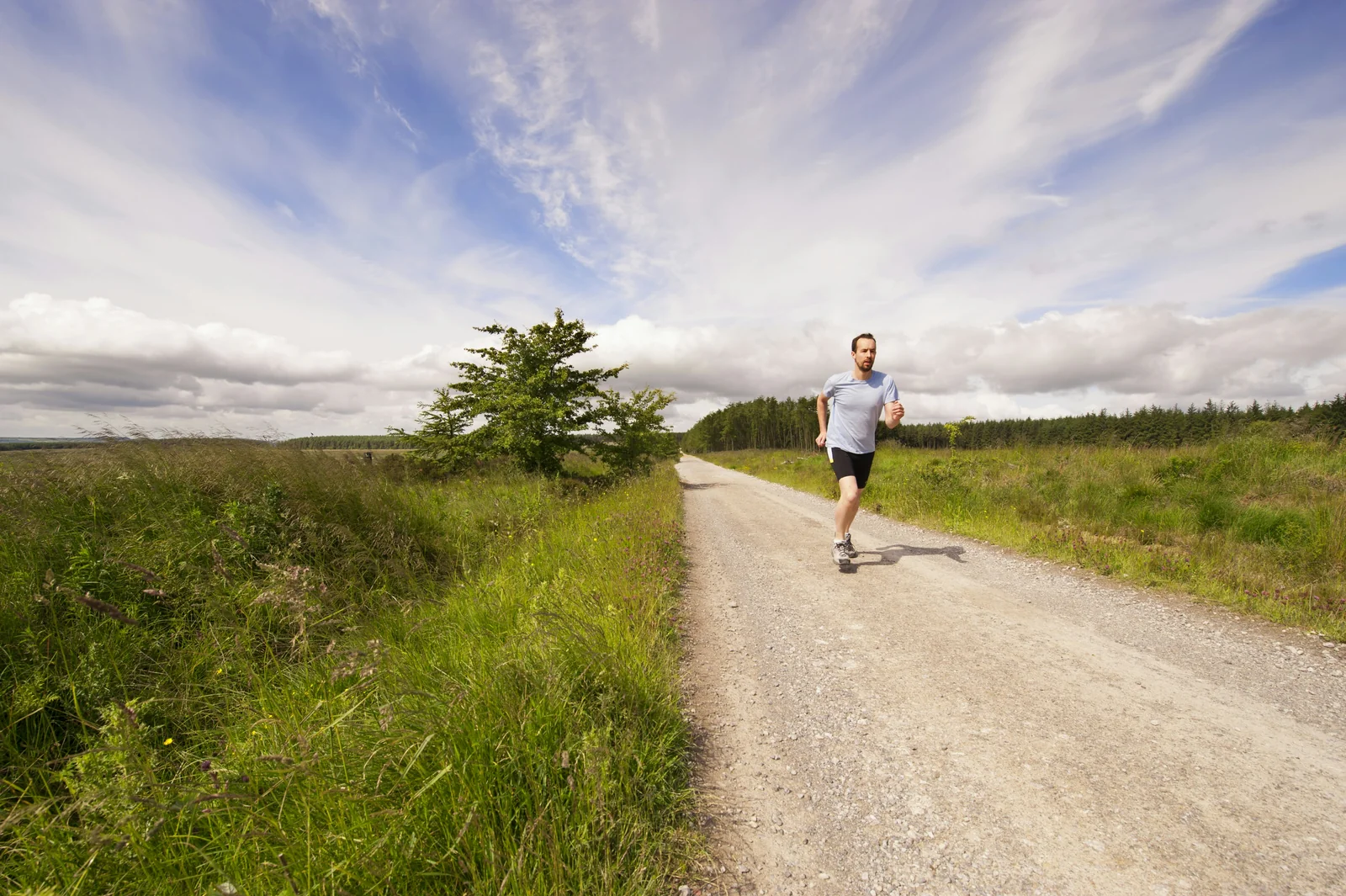
For many men, summer is when motivation to be active peaks – longer evenings, better weather, more reasons to be outside. Running, cycling, football, golf, weekend cricket, open-water swimming – whatever your version of it looks like, summer provides a genuine lift.
But heat changes the equation in ways that are easy to underestimate, particularly for men who tend to push harder than they probably should. The body's cooling systems have limits, and when the environment is already hot and humid, those limits can be reached more quickly than expected.
What Happens in the Heat
When you exercise, your body generates significant heat – far more than when you're at rest. Your cooling systems kick in: blood is redirected to the skin, and you sweat. In cool conditions, this works efficiently. In hot and humid conditions, it becomes harder. Sweat doesn't evaporate as well when the air is already humid, and redirecting blood to the skin means less is available for working muscles – which is why the same effort level feels considerably harder in heat.
Core body temperature rising beyond a certain point causes performance to decline and, in serious cases, can lead to heat exhaustion or heat stroke – the latter being a medical emergency.
Timing Your Activity
The simplest adjustment is timing. The hottest part of the day in the UK is typically between 11am and 3pm – avoiding vigorous outdoor exercise during these hours on warm days makes a real difference. Early morning and evening are cooler, and often more pleasant for training anyway.
If you can't adjust your timing – a lunchtime run, an evening game that extends into the heat of the day – then adjusting your effort level is the next best thing. In hot weather, perceived effort is a better guide than pace or heart rate targets alone: if it feels much harder than usual, it probably is, even if your numbers look similar.
Hydration: More Than Just Drinking Water
Sweat rates increase significantly in the heat – men sweating up to 2 litres per hour in very warm conditions during exercise. Hydration matters, but the specifics are worth knowing:
- Start well hydrated – pale yellow urine before exercise is a reasonable indicator
- Drink during activity – for sessions under an hour, plain water is fine; for longer sessions, something with electrolytes (sodium, potassium) may help maintain performance and prevent cramping
- Don't overhydrate – drinking excessively before exercise in an attempt to "pre-load" can cause its own problems. Drink to thirst as a general guide
- Rehydrate after – weigh yourself before and after if you want a precise guide; every kg of weight lost is roughly 1 litre of fluid to replace
- Alcohol post-exercise in hot weather – a post-match beer is a summer staple, but alcohol is mildly diuretic and slows rehydration; alternating with water is sensible
Sun Protection for Men
Men are statistically much less likely to wear sunscreen than women – and significantly more likely to develop skin cancer. Skin cancer is the fifth most common cancer in the UK, and rates in men are notably higher, partly because of lower protection habits.
For outdoor activity, SPF 30 or above on exposed skin is a practical baseline. Applying it before you head out – not once you've already been in the sun for 20 minutes – matters. Ears, the back of the neck, and the top of the head (particularly for those with thinning hair) are commonly missed areas. A hat is a simple addition for activities where wearing one is practical.
Warning Signs to Take Seriously
Most people experience some tiredness in the heat, but certain symptoms indicate something more serious:
- Heat exhaustion: heavy sweating, weakness, cool or pale skin, nausea, headache, dizziness. Stop activity, move to a cool place, hydrate, rest. Recovery within 30 minutes is usual.
- Heat stroke: body temperature above 40°C, hot and dry skin, confusion, loss of consciousness, rapid pulse. This is a medical emergency – call 999. Cool the person rapidly while waiting for help.
Men in middle age with underlying health conditions (particularly cardiovascular) are at higher risk in the heat and should be especially mindful of their effort levels on hot days.
Acclimatisation
The body does adapt to heat over time – with regular heat exposure over 10–14 days, cardiovascular efficiency, sweat rate, and performance in the heat all improve. If you're planning activity in a much hotter environment (a sporting holiday, a race abroad), building in time to acclimatise before your main event makes a meaningful difference.