The 7am sandwich impasse. The lunchbox that comes home untouched again. The wail of "I HATE wraps now" the morning after a successful wrap. If you're parenting a child between five and ten, school lunches can feel like a small daily war, small enough to lose properly, big enough to get into your evenings.
The good news, sort of, is that the food itself is rarely the whole story. Children at this age are working out preferences, identity, control, social cues from the lunch hall, what their friends bring, what the dinner ladies say. The aim isn't to win the lunchbox, it's to take some of the heat out of it, and to feed the body in the process.
The basic rule of thumb
Most child nutritionists agree on a simple shape for a packed lunch: something familiar (the part they will reliably eat), something for energy (a slow-release carbohydrate like wholemeal bread, oatcakes, pasta or potato), something with protein (egg, cheese, hummus, beans, leftover chicken), something fresh (a fruit or some chopped veg), and a drink that isn't full of sugar. That's it. It doesn't need to be Instagram-pretty.
You're aiming for "enough of the good stuff to keep them going till tea, with one bit they're definitely going to eat." Not perfection.
Working with their preferences, not around them
The biggest reason packed lunches come home half-eaten is that the child wasn't part of the conversation. Many parents find a small Sunday-evening chat, what shall we go for this week, sandwiches or wraps?, saves three mornings of negotiation. You're still in charge of the choices on offer; the child gets to feel some authorship of what lands in the box.
When something starts being rejected, ask why before assuming. "It's wet by lunchtime." "Everyone else has crackers." "I can't open the pot." A surprising number of lunchbox refusals turn out to be about packaging or peer pressure, not about the food itself.
Morning shortcuts that actually save time
A weekly rotation of three or four lunches saves more time than any clever app. Decide on Sunday, write it on the fridge, do the shop accordingly. Many parents also find batch-prep helps: cooking pasta on Monday for Tuesday's pasta salad, hard-boiling eggs at the weekend, freezing rolls so they defrost by lunch and act as their own ice pack.
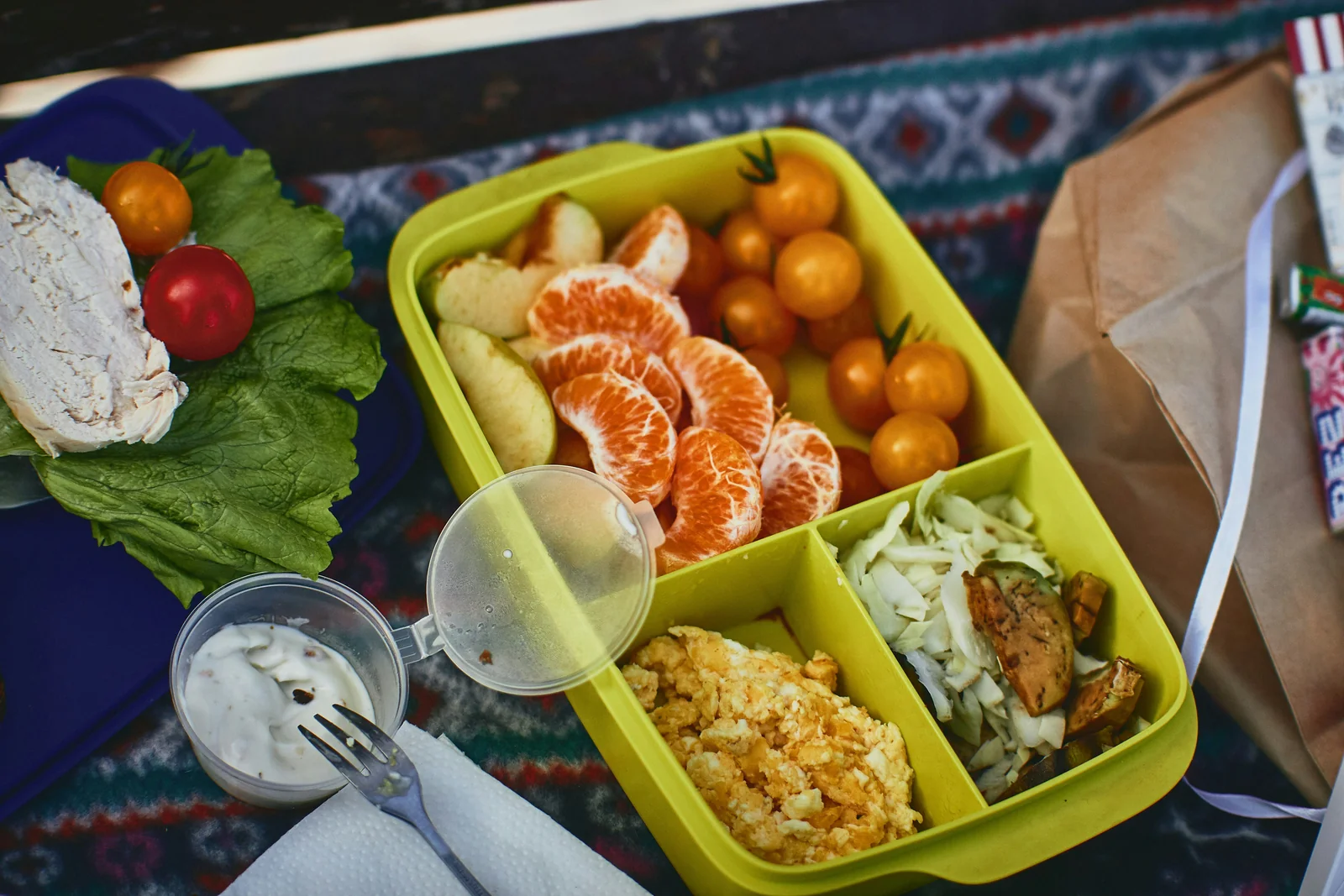
Bento-style boxes with separate compartments tend to produce less waste than sandwich-plus-side, partly because food doesn't get soggy and partly because children seem to like things being separate at this age. None of this is a moral question, whatever gets a real meal into a child without ruining your morning is the right answer.
The lunchbox is rarely about the lunchbox. The aim is enough of the good stuff to keep them going, packed in a way that doesn't ruin your morning.
When it stops feeling normal
Most school-age children have phases of being awkward about food. A two-week stretch of refusing tomatoes is not a thing. A child who is steadily eliminating whole food groups, losing weight, becoming distressed at meals, or whose eating is shrinking rather than expanding over months is in different territory and worth a chat with your GP, school nurse, or a registered dietitian. Eating that's started to feel rule-bound or anxious is also worth flagging early, early conversations are easier than late ones.
For most families, though, the picture is steadier than it feels in the moment. Children's appetites are uneven; their preferences are real; the lunchbox is just one meal of many. A child who eats a familiar sandwich and a piece of fruit five days a week is doing fine.
If you'd like a steadier eye on what your child is eating, the Welvow directory includes nutritional therapists and registered dietitians who work with families and school-age children, sometimes a one-off session is enough to take the temperature down. For sustained struggles around eating, your GP or school nurse is the first port of call.
Find your practitionerA child who eats a familiar sandwich and a piece of fruit five days a week is doing fine. The lunchbox doesn't have to be a thing, and most days, with a small bit of forethought, it doesn't need to be.