After winter's inward, slower pace, spring brings a distinct upward surge of energy that the body naturally wants to express through movement. The urge to go outside, start something new, move the body more – these are seasonal impulses worth honouring. At the same time, the Wood element's energy can become excessive if not channelled wisely, turning drive into agitation and expansion into depletion.
The TCM Approach to Spring Movement
In TCM, spring is associated with the tendons and sinews – the connective tissues that allow the body to flex, extend, and move freely. The Liver, which governs these tissues, is most active in spring, and keeping tendons and ligaments supple and well-nourished is particularly important at this time of year. This is one of the reasons spring is considered an ideal time to begin or deepen a stretching or flexibility practice – the body is naturally more receptive to this kind of work.
TCM recommends more outdoor activity in spring, particularly in the early morning when the energy of the day is fresh and rising. Walking in parks, gardens, or green spaces is considered especially beneficial – green is the colour of spring and of the Wood element, and being among growing things is thought to harmonise with the season's Qi.
Stretching and Flexibility
Because spring governs the tendons, prioritising flexibility and range of motion is particularly appropriate now. Gentle stretching on waking – before the day's demands take over – helps counter the stiffness that can accumulate overnight and sends a signal to the nervous system that the body is ready to move.
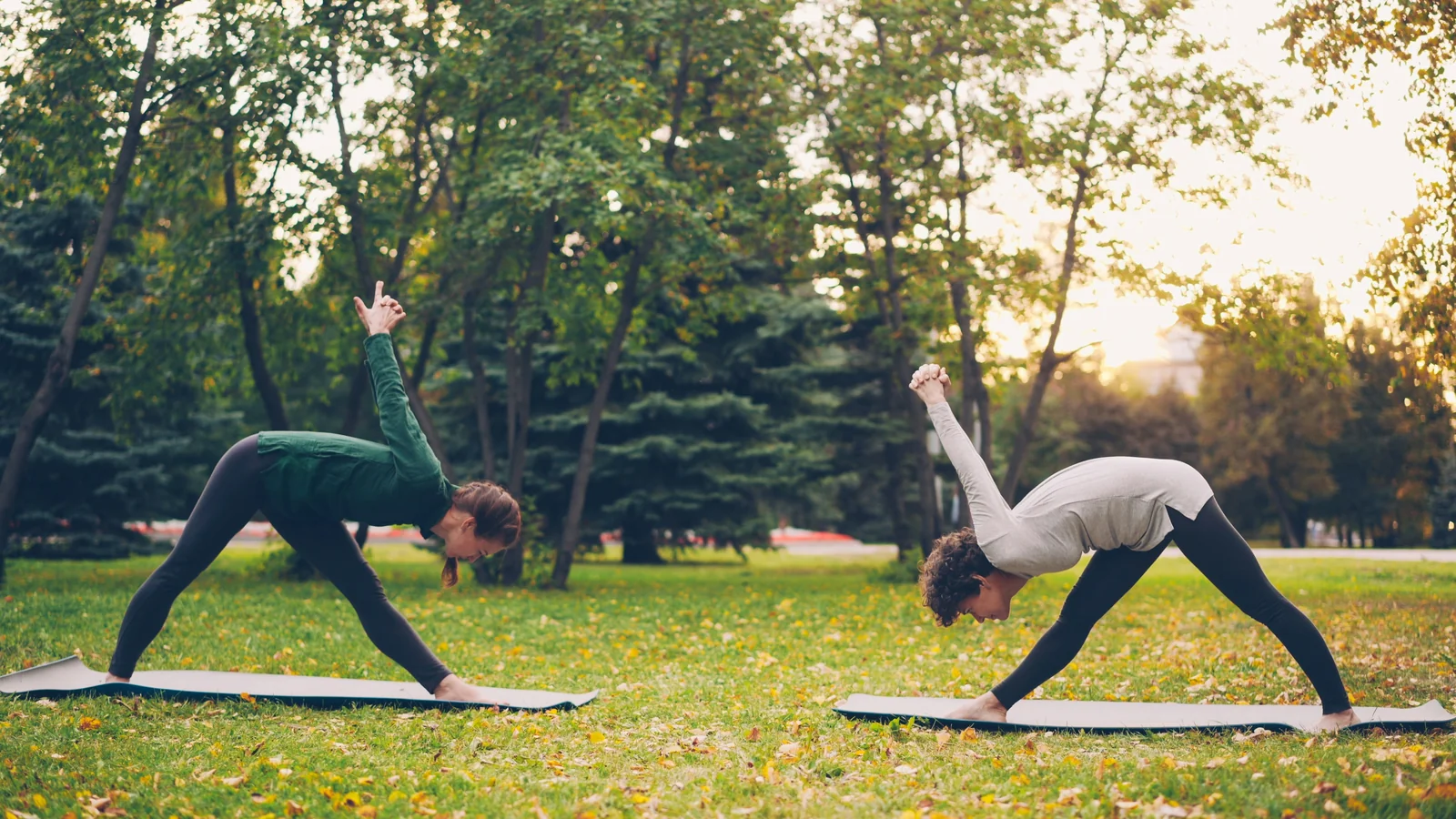
Yoga is well suited to spring, particularly styles that include longer holds in seated and standing stretches, side bends, and twists. Twisting postures are especially valued in spring – they compress and release the liver and digestive organs, encourage lymphatic flow, and create a sensation of wringing out any stagnation that has accumulated. Even a simple seated spinal twist first thing in the morning is a worthwhile spring practice.
Walking and Being Outdoors
Walking is consistently recommended across healing traditions as the foundational form of movement for most people – and spring makes it particularly inviting. Regular walks in natural settings, even short ones, have measurable effects on cortisol levels, mood, cognitive function, and immune activity. In spring, the combination of movement, fresh air, green surroundings, and increasing light amplifies all of these effects.
Walking early in the morning – catching the first light – also supports the circadian rhythm and helps regulate the body's internal clock, which may have become slightly desynchronised during winter's shorter days.
Building Activity Gradually
One of the important cautions in TCM for spring is not to overdo it too quickly. The surge of energy that spring brings can make people feel more capable than they actually are at the start of the season – leading to overdoing exercise, taking on too much, and then crashing. The Wood element's energy, when in excess, drives without limit and doesn't know when to stop.
Building physical activity gradually through spring – a little more each week – is wiser than launching into intense training immediately. The tendons and connective tissues in particular need time to adapt; most sports injuries happen when effort increases faster than the supporting tissues can strengthen.
Qi Gong and Tai Chi in Spring
These traditional Chinese movement practices are particularly well suited to spring. Many Qi Gong sequences include specific practices for the Liver and Gallbladder meridians – movements that open the sides of the body, stretch the ribcage, and encourage the flow of Qi through the Wood element pathways. Even a simple daily practice of 10–15 minutes may support the Liver, reduce tension, and help process the emotional energy that spring can stir up. Many classes are available online for beginners.
The Emotional Body in Spring
Movement in spring isn't only physical. The emotion of the Wood element is anger – and spring is a time when unexpressed or pent-up emotional energy wants to move. Physical movement is one of the most effective ways to process and release emotion; vigorous walking, dance, or any form of movement that allows full expression can be particularly cathartic at this time of year. The TCM understanding that emotion and physical movement are deeply connected is something Western research on exercise and mood increasingly supports.