Herbs have been used for spring renewal and liver support across almost every healing tradition in the world. What's remarkable is how much overlap there is between Western herbalism and Traditional Chinese Medicine when it comes to spring – both traditions point clearly towards bitters, liver herbs, and plants that help shift winter stagnation and restore flow.
Western Spring Herbs
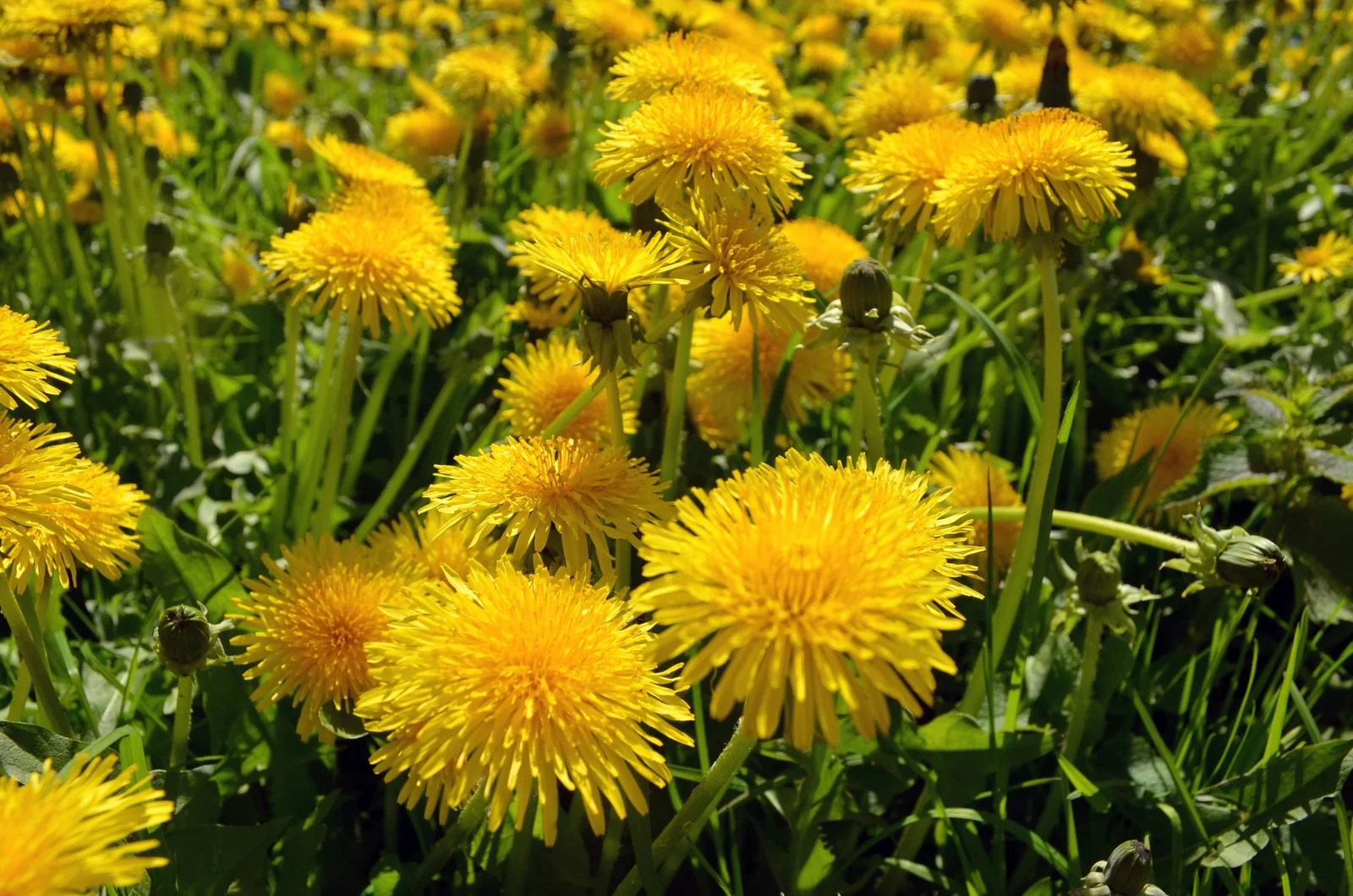
Dandelion (Taraxacum officinale) is perhaps the definitive spring herb. Every part of the plant is medicinal: the root supports liver detoxification and bile production; the leaves are a rich source of vitamins A, C, and K, potassium, and iron, and act as a gentle diuretic (returning potassium unlike pharmaceutical diuretics); the flowers can be used in salads or infused in oil. Dandelion is one of the most widely available and genuinely effective bitter liver herbs – the fact that many people try to eradicate it from their gardens is one of nature's small ironies. Young dandelion leaves picked before the plant flowers make a wonderful addition to spring salads.
Milk thistle (Silybum marianum) is one of the most researched herbs for liver health. Its active compound, silymarin, has well-documented hepatoprotective properties – meaning it may help protect liver cells and support their regeneration. It's used in Western herbalism for liver support, sluggish digestion, and recovery after periods of excess. Available as a supplement (standardised extracts are most reliably dosed), or as a tea from the crushed seeds.
Nettle (Urtica dioica) is one of spring's great gifts – extraordinarily nutritious (high in iron, calcium, magnesium, vitamins C and K), gently detoxifying, and a traditional tonic herb across European traditions. Nettles are best picked young in early spring before the plant flowers, and can be made into soup, pesto, tea, or steamed like spinach. They're considered a classic spring blood tonic and may help with hayfever when taken regularly before the season begins.
Cleavers (Galium aparine) – the sticky, scrambling plant that attaches itself to clothing – is a specific spring lymphatic herb in Western herbalism. It's traditionally used to support the lymphatic system's drainage and cleansing function, which is particularly relevant in spring as the body emerges from winter. Cleavers juice (blended fresh and strained) is one of the most traditional spring tonics.
Burdock root (Arctium lappa) is used in both Western herbalism and traditional Japanese and Chinese medicine as a liver and skin herb. It's mildly bitter, rich in inulin (a prebiotic fibre), and has been used for centuries for clearing skin conditions, supporting the liver, and stimulating digestion. In Japanese cooking it's eaten as a vegetable (gobo); as a herb it can be used as a decoction or in supplements.
TCM Spring Herbs
Chai Hu (Bupleurum) is one of the most important TCM herbs for the Liver and spring. It is used to soothe Liver Qi stagnation – addressing the irritability, tension, and emotional tightness that can arise when Liver Qi doesn't flow freely. It's rarely used alone in TCM (it's usually part of a formula) but appears in many classical spring-appropriate formulae including the famous Xiao Yao San (Free and Easy Wanderer), which addresses Liver Qi stagnation with associated digestive symptoms and emotional tension.
Bai Shao (White Peony Root) is used in TCM to nourish Liver Blood and soften the Liver – counterbalancing the rising, ascending yang energy of spring with a gentle nourishing quality. It's particularly valued for conditions involving tension, cramps, and headaches associated with Liver Blood deficiency. Often paired with Chai Hu in formulae.
Ju Hua (Chrysanthemum flowers) are cooling and specifically directed towards the Liver and eyes in TCM. A simple chrysanthemum flower tea is a traditional spring and summer remedy for red, tired, or strained eyes, headaches, and any signs of Liver Yang rising. It's pleasant, easy to find, and very safe to use as a daily tea through spring.
Gou Qi Zi (Goji berry) is used in TCM to nourish Liver and Kidney Yin and Blood, and to benefit the eyes. As spring demands that the Liver rise and expand, goji berries provide nourishing support so that expansion doesn't deplete. They're one of the more accessible TCM herbs – available in most health food shops – and can be eaten directly, added to porridge, or made into tea.
Simple Spring Herbal Practices
- Morning dandelion or nettle tea – a cup of dandelion root tea or nettle infusion each morning is a simple, effective spring tonic
- Chrysanthemum and goji berry tea – available in most Chinese supermarkets; steep together for a gentle TCM spring eye and liver tonic
- Milk thistle supplement – a standardised extract (70–80% silymarin) taken daily through spring
- Forage young nettles and dandelion leaves for salads and soups where possible – fresh herbs from a clean location are the most vital form