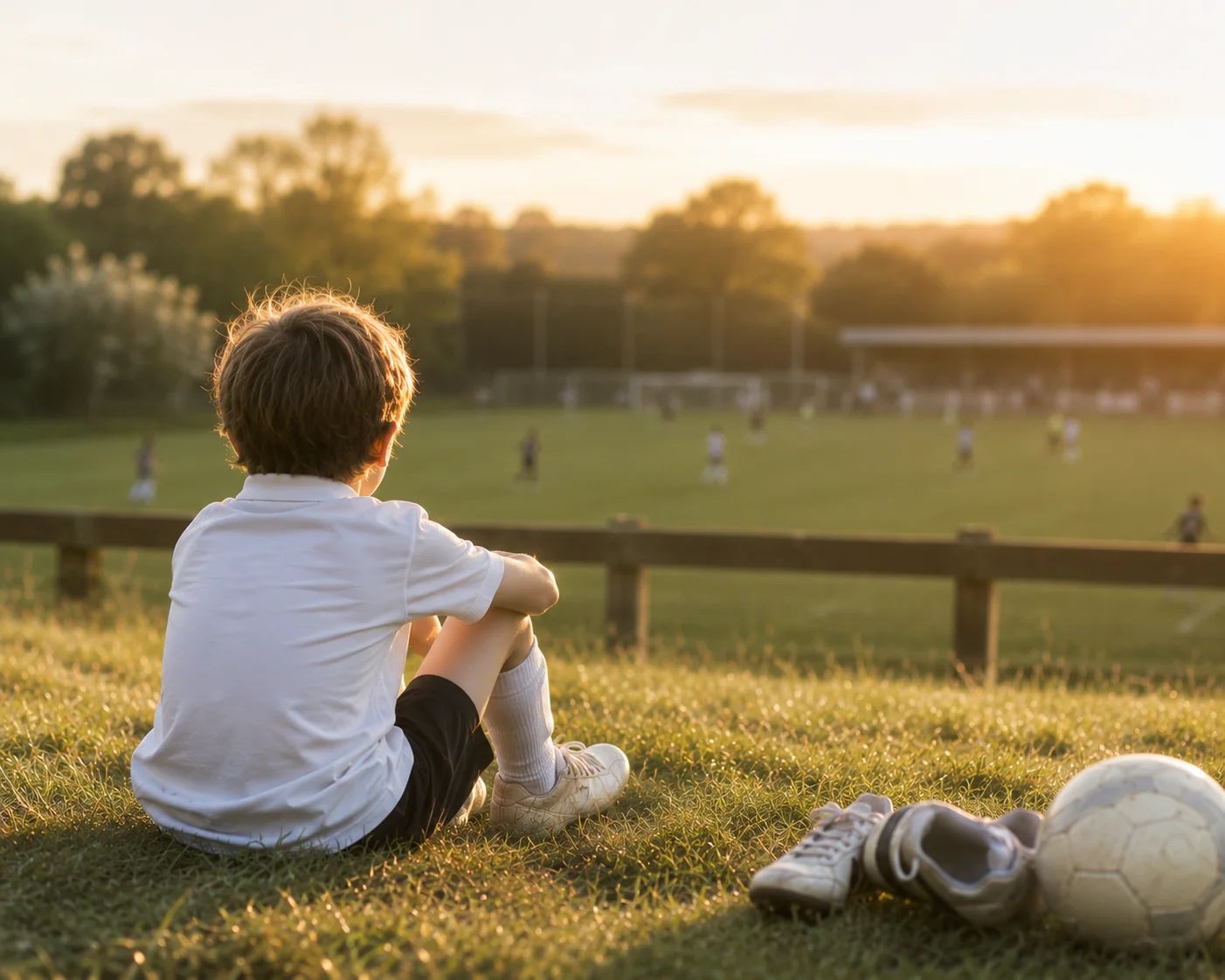
A big tournament pulls the whole household in. Children who barely knew the rules a fortnight ago are suddenly wearing the shirt, learning the names, and staying up past bedtime for a match that means everything. It is one of the loveliest things about a summer of sport, and it asks a fair amount of small bodies and big feelings.
Two things tend to arrive together this time of year: less sleep than usual, in warmer rooms than usual, and the genuine heartbreak of watching your team lose. Neither is a problem to be solved so much as a stretch to be handled kindly. A little steadiness from the grown-ups goes a long way.
Late nights and hot bedrooms
Children and teenagers need more sleep than adults, and they feel the loss of it more sharply, often as tears, wildness or a short fuse the next day rather than an obvious yawn. A late match now and then won't undo anything, but it helps to keep the rest of the day's rhythm as familiar as you can: the usual wind-down, the usual routine, even if the timings shift a little.
Warm nights make it harder still. Keeping bedrooms cool through the day by closing curtains and windows against the sun, then opening up once the evening cools, makes a real difference. Light bedding, a lukewarm bath before bed, and a cool glass of water within reach all help a hot little body settle. On the muggiest nights, a slightly later, calmer start the next morning is worth more than insisting everything runs to time.
A late match won't undo anything. What helps most is keeping the rhythm around it familiar, and going gently the morning after.
When their team loses
For a child, a lost match can feel like the end of the world, because in that moment it genuinely is their whole world. The disappointment is real, and it deserves to be met as real. The instinct to jump in with "it's only a game" is loving, but it can land as though their feelings are the thing that's wrong.
It often helps more to let the feeling be felt first. You might simply name it, telling them "you really wanted them to win, and they didn't, and that hurts", and sit with them while it passes. Children borrow our calm before they can find their own, so a steady voice and an unhurried cuddle do more than any pep talk. The reassurance and the perspective can come afterwards, once the wave has moved through.
What they learn from watching us
Tournaments are a quiet lesson in how to lose well, and children learn it mostly by watching the adults around them. If we can groan at the telly and then let it go, shake hands with the friend supporting the other side, and wake up the next day still cheerful, we show them that disappointment is survivable and that it doesn't have to spoil everything around it.
Small rituals help too. A walk the morning after a late night, a shared breakfast rehashing the good bits, or already looking forward to the next match gives a child somewhere to put the feeling. The tournament will end soon enough; the way we carried them through it tends to stay.
If your child finds big feelings especially hard to weather, or sleep has become a regular struggle, Welvow includes practitioners who work gently with children's wellbeing and family life. Many offer a free introductory call and online sessions, so you can find the right kind of support quietly, from home.
Find your practitionerWhatever the scoreline, the late nights and the tears are part of a summer they'll remember. Meet them with a little patience and a lot of warmth, and the losses become something you got through together.