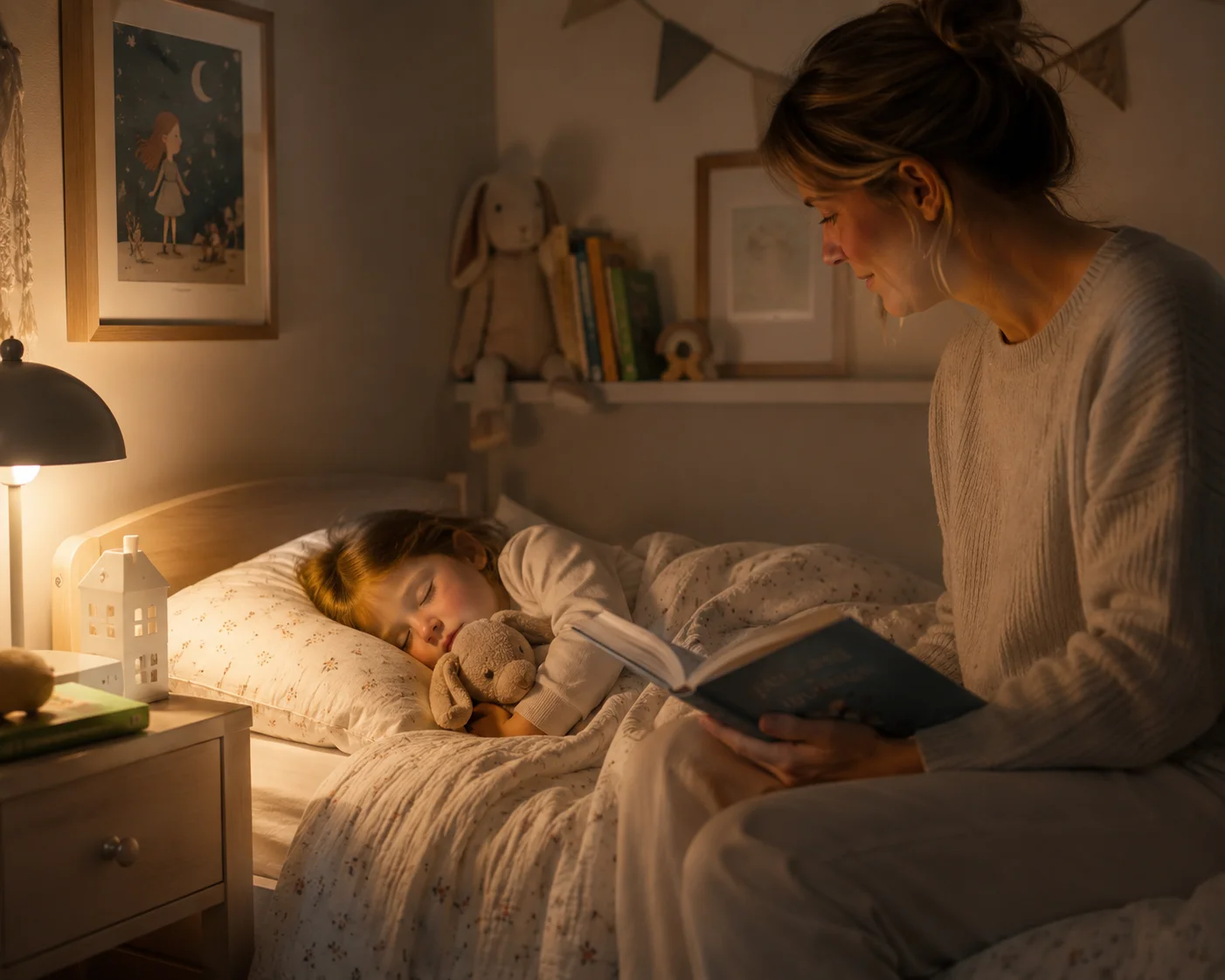
Many children and young people will experience anxiety at some point, and when they do, sleep is often the first thing to slip. The night feels longer. Worries surface in the quiet. School the next day starts harder than it needs to.
You know your child best, so you'll likely have a quiet sense if something isn't quite right. A few common signs:
- Difficulty falling asleep, or waking through the night
- Restlessness, irritability or sudden outbursts
- Tummy aches or saying they feel poorly, especially before school
- Clinginess that hasn't been there before
- Big feelings around things that used to feel ordinary
What follows are some of the small, practical things that often help. None of these are a magic answer. Most work quietly, over time.
The rhythm of the evening
A predictable, unhurried bedtime routine quietly signals to the body and mind that the day is winding down. The same handful of steps, in roughly the same order, every night. Bath, pyjamas, a story, lights low. It isn't the specifics that matter, it's the rhythm.
Screens off, an hour before bed
The blue light from phones, tablets and TVs interferes with the body's natural melatonin rhythm. Beyond that, what's being watched can quietly add to whatever's already on a child's mind. Turning screens off an hour or two before bed is one of the simplest changes that tends to make a real difference.
Be mindful of what they hear
News on the radio in the car. Adult conversations in the background. A documentary playing while supper is being made. Children pick up far more than we often realise, and not all of it is age-appropriate. A small bit of awareness about the audio backdrop of the day can quietly ease the load.
Reading as a gentle wind-down
Reading at bedtime, alone or together, is one of the most reliable ways to help a busy mind settle. It's a small escape into another world, and it builds connection at the same time if you're reading together.
Have the worry conversation earlier in the day
Try to move difficult or worrying conversations away from bedtime. Earlier in the day gives the mind time to settle. Bedtime is for calm, warmth and connection, not for surfacing the hardest thing.
The worry jar (or the worry monster)
Many younger children find it helpful to write down a worry on a small piece of paper and put it in a designated "worry jar", or feed it to a soft toy designated as the worry monster. The act of writing the worry out, and physically putting it somewhere else, can quietly help the mind let it go for the night. Parents can pick it up later and decide whether anything needs gentle following-up.
Journaling for older children
For teenagers, a private journal can be the older version of the worry jar. There's research suggesting that simply writing feelings down, without anyone reading them, can help with both anxiety and sleep.
Movement and stimulation during the day
Daily physical activity is one of the most consistent supports for both mood and sleep. It doesn't need to be a sport, a walk, a kick-about in the garden, a trampoline, a dance round the kitchen all count. A gentle note: keep the high-intensity activity well away from bedtime. The body needs an hour or two to settle.
Boundaries as a quiet kind of safety
Children often find clear, kind boundaries reassuring, they know what's coming, what's expected, what's a yes and what isn't. That predictability is itself a form of safety.
Mindfulness, gently
Short, child-friendly mindfulness practices can be a small but lovely addition to the wind-down. Apps like Headspace, free YouTube guided practices, or simply a few slow breaths together, none of these have to feel formal. Done little and often, they teach the nervous system that calm is available.
"Bedtime is for calm, warmth and connection, not for surfacing the hardest thing."
If sleep has been a longer-running puzzle, a paediatric sleep coach can be a gentle starting point, they tend to look at the whole picture of bedtime, day, family rhythm and emotional weather. Welvow's directory includes sleep coaches and child practitioners who work with families exploring better rest.
Find your practitionerHowever the nights are landing right now, small steady changes tend to settle things over weeks rather than days. Wherever you are with it, your child being able to feel safe at bedtime is the heart of it.