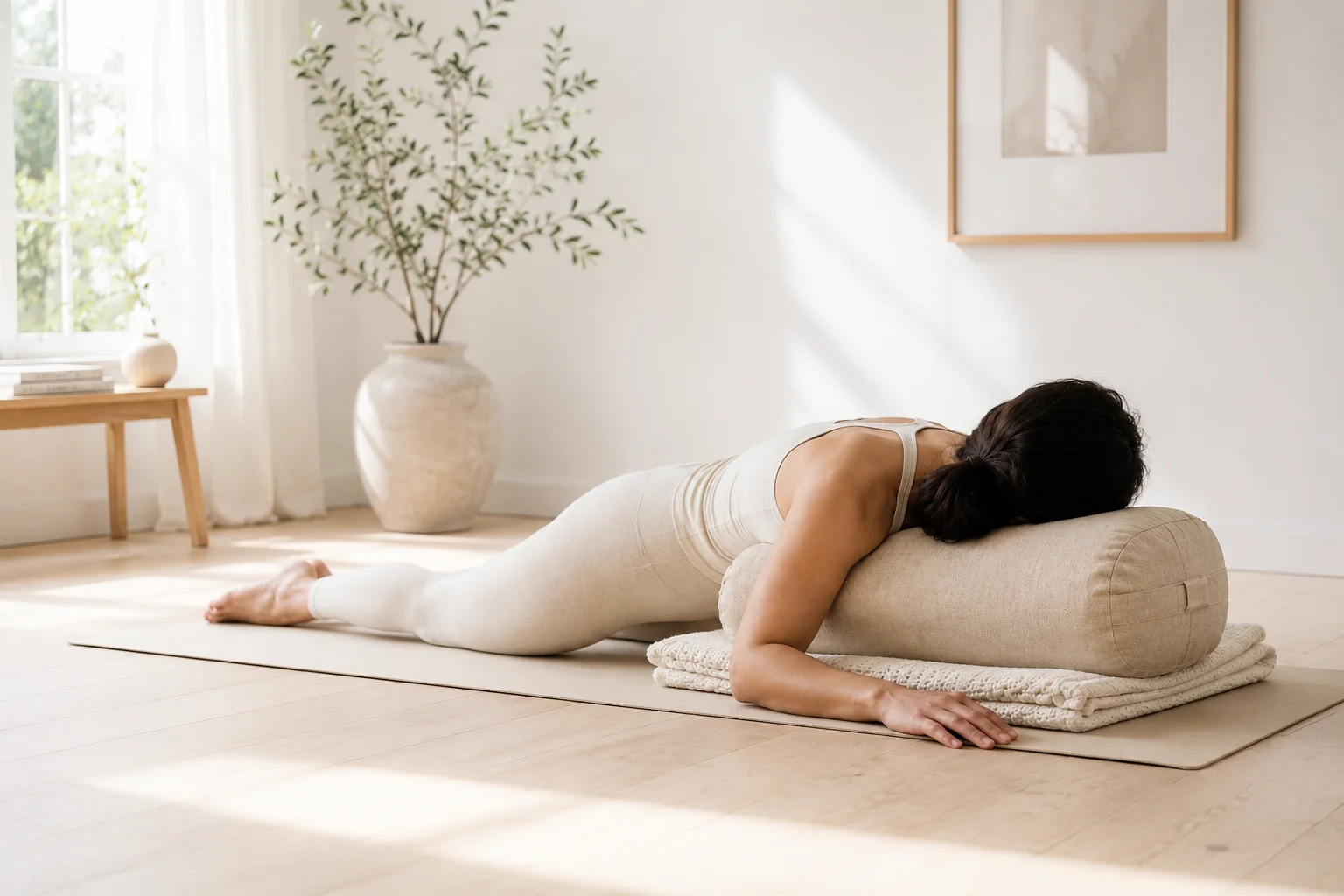
We live in a bustling, interconnected world, and the constant hum of modern technology pulls our attention in every direction at once. Most of us know the feeling: more connected than ever through our screens, yet somehow more distant from ourselves.
We are also bombarded with messages about what our bodies and minds are supposed to need. Fitness apps push the workout, nutrition guides dictate the plate, and somewhere in all of it, the quieter voice of our own intuition gets harder to hear. Yin yoga, with its slow pace and emphasis on stillness, offers a gentle counterweight to that noise.
What Yin Yoga Actually Is
Where more dynamic styles of yoga build heat and movement, yin works in the opposite direction. Poses are held passively for several minutes at a time, often seated or lying down, with the body fully supported by the floor, bolsters or blankets. There is very little effort involved. The work, if you can call it that, is in staying.
That longer hold is what gives yin its particular quality. Rather than working the muscles, the practice gently invites the deeper, slower tissues of the body to release, and gives the nervous system time to settle. Many people find that even a short sequence leaves them feeling noticeably calmer and more grounded.
The Practice of Surrender
One of the core principles of yin is the encouragement to surrender into each pose, allowing gravity to do the work as tension is released. That surrender goes beyond the physical. It quietly invites us to loosen our grip on the constant stream of information competing for our attention, and to let something soften that we have perhaps been holding for a long time.
In the quiet space that stillness provides, we create an opportunity to listen to the whispers of our intuition that so often get drowned out.
Stillness can feel surprisingly uncomfortable at first. When the body stops, the mind often gets louder, and the urge to reach for a phone or reorganise the day can be strong. This is normal, and part of the practice. Over time, many people find the discomfort eases, and the stillness starts to feel less like something to endure and more like somewhere to rest.
Listening Inward
Through the practice of yin, we learn to tune into the body and ask some simple, honest questions. What does my body need today? What am I actually feeling? By cultivating stillness, we make space for the kind of reflection that the pace of ordinary life rarely allows, and a gentle antidote to the external noise that so often shapes our choices.
In the soothing quiet of a yin practice, it becomes easier to attune to the subtle rhythms of the natural world, and to a sense of harmony and balance. It is a reminder that we are not separate from everything around us, but part of the same interconnected whole.