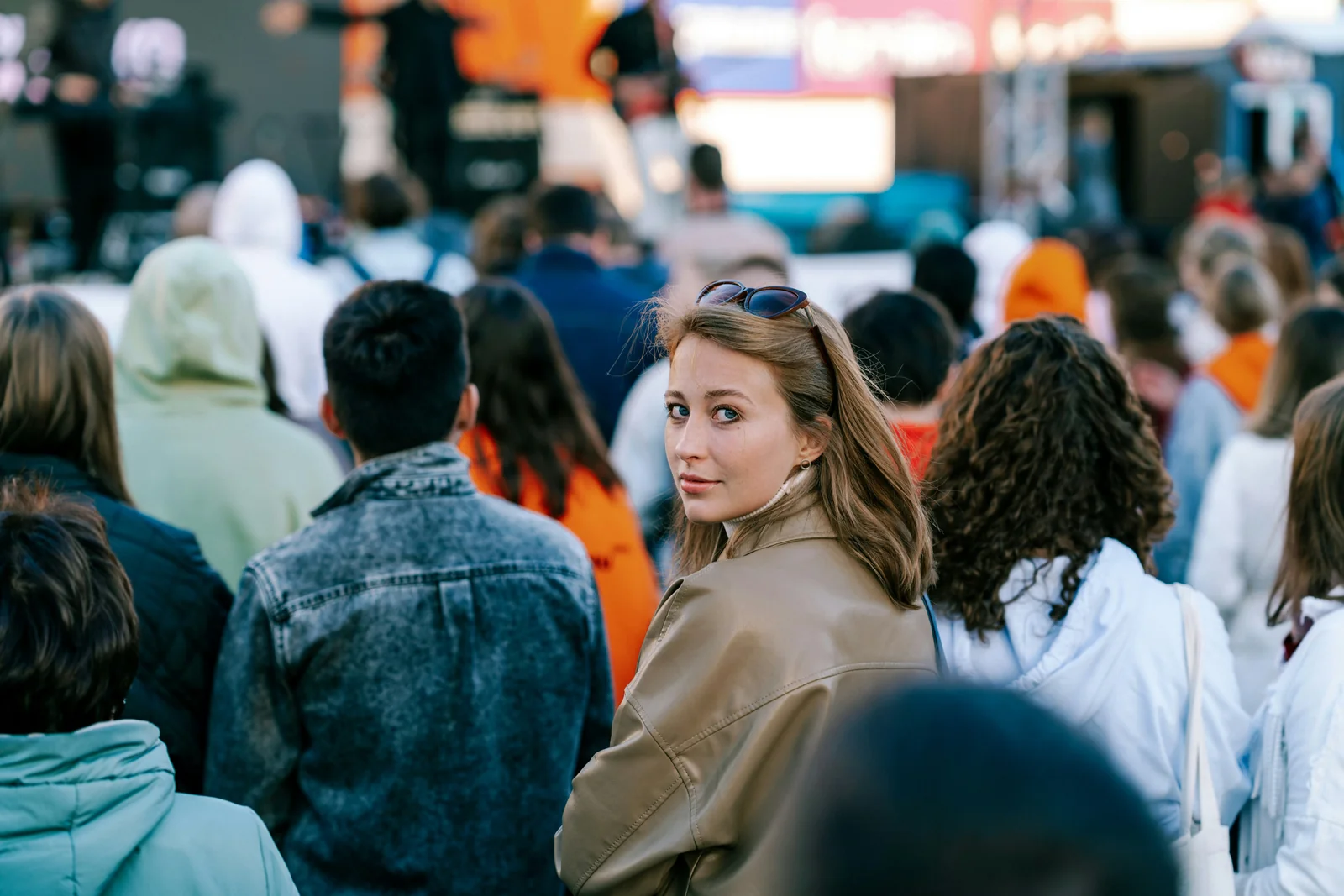
Most people adapt their behaviour to some degree depending on context. We might be more formal in a work meeting and more relaxed at home. But masking, as experienced by many autistic and ADHD people, is something of a different order. It's not occasional code-switching. It's the sustained, often unconscious effort of suppressing stimming, monitoring every word for social appropriateness, scripting conversations in advance, suppressing the impulse to hyperfocus or talk at length about a subject of intense interest, and managing the physical discomfort of sensory input while appearing entirely unaffected.
Many people who mask describe it as having two selves, the one that faces the world and the one that exists privately. The gap between them can be enormous, and maintaining it takes enormous energy.
Why people mask
Masking is not vanity or pretension. It tends to develop as a survival strategy, often from childhood, in response to very real signals that being openly neurodivergent is not safe or accepted. Children who are mocked for their special interests, corrected for stimming, punished for meltdowns, or excluded for social differences learn to hide these things. The masking becomes automatic over time, so deeply embedded that many people are not aware they're doing it until they begin to understand their own neurology.
The environments that most reward masking are often also the environments that are most hostile to neurodivergent authenticity: school, offices, social situations built around neurotypical norms. Many neurodivergent people are implicitly rewarded for masking well, which reinforces the behaviour even as it takes a significant toll.
Masking well enough to pass as neurotypical is often described as an exhausting performance. The audience rarely sees the preparation, the effort, or the collapse that sometimes follows.
What it costs
The research on masking and wellbeing is fairly consistent. Higher levels of masking are associated with greater rates of anxiety, depression, and burnout among autistic and ADHD people. Some research suggests that the energy demands of sustained masking, the constant monitoring and suppression, may contribute significantly to autistic burnout, a state of profound cognitive and emotional exhaustion that can take months or longer to recover from.
There's also an identity dimension. When the version of yourself that you present to the world is a carefully managed performance, it can become genuinely difficult to know what you actually think, feel, or prefer. Some people who have masked for decades describe a real disorientation when they begin to unmask, not knowing what their authentic responses to things are, having spent so long suppressing them.
Unmasking: what does it actually mean?
Unmasking isn't a single decision or a dramatic unveiling. For most people, it's a gradual process, often tied to finding environments and people where it feels safe to be more authentically themselves. It might begin with small things: allowing yourself to stim in private, or with trusted people. Being honest about sensory needs. Stopping pretending to find social small talk easy when it isn't. Letting your genuine interests be visible.
The process can bring up complicated feelings. Some people feel grief for the years spent in performance. Others feel anxious about being genuinely known, having spent so long carefully managing what's visible. Some find that relationships that seemed solid begin to feel less comfortable when they're no longer performing within them, which can itself be clarifying information.
For many people, working with a therapist who understands neurodivergent experience is a significant part of this process. Having a space to explore what masking has meant, and what a less masked life might look like, can be genuinely valuable, particularly for people who've been doing it for many years.
Environments that make it easier
Unmasking tends to happen most readily in environments where it's safe to do so. Many neurodivergent people describe the relief of spending time with other neurodivergent people, where the social pressure is simply different, where stimming isn't remarked upon, where intense interests are met with interest rather than polite tolerance, and where communication is more direct and less performance-dependent. Building more of these spaces into life, whether through community, relationships, or work environments, tends to make a real difference to overall wellbeing.
Find support on Welvow
Working through the unmasking process
Many people find that having a therapist familiar with neurodivergent experience creates a rare space where masking isn't required and the work of understanding yourself more honestly can begin. Welvow's directory includes therapists and counsellors who work with neurodivergent adults in this way.
Find a practitionerThe performance of being someone else is tiring in a way that's hard to explain to someone who hasn't done it. Reducing that performance, even gradually, even imperfectly, tends to return something important: a sense of being actually known, in at least some part of your life. That turns out to matter a great deal.