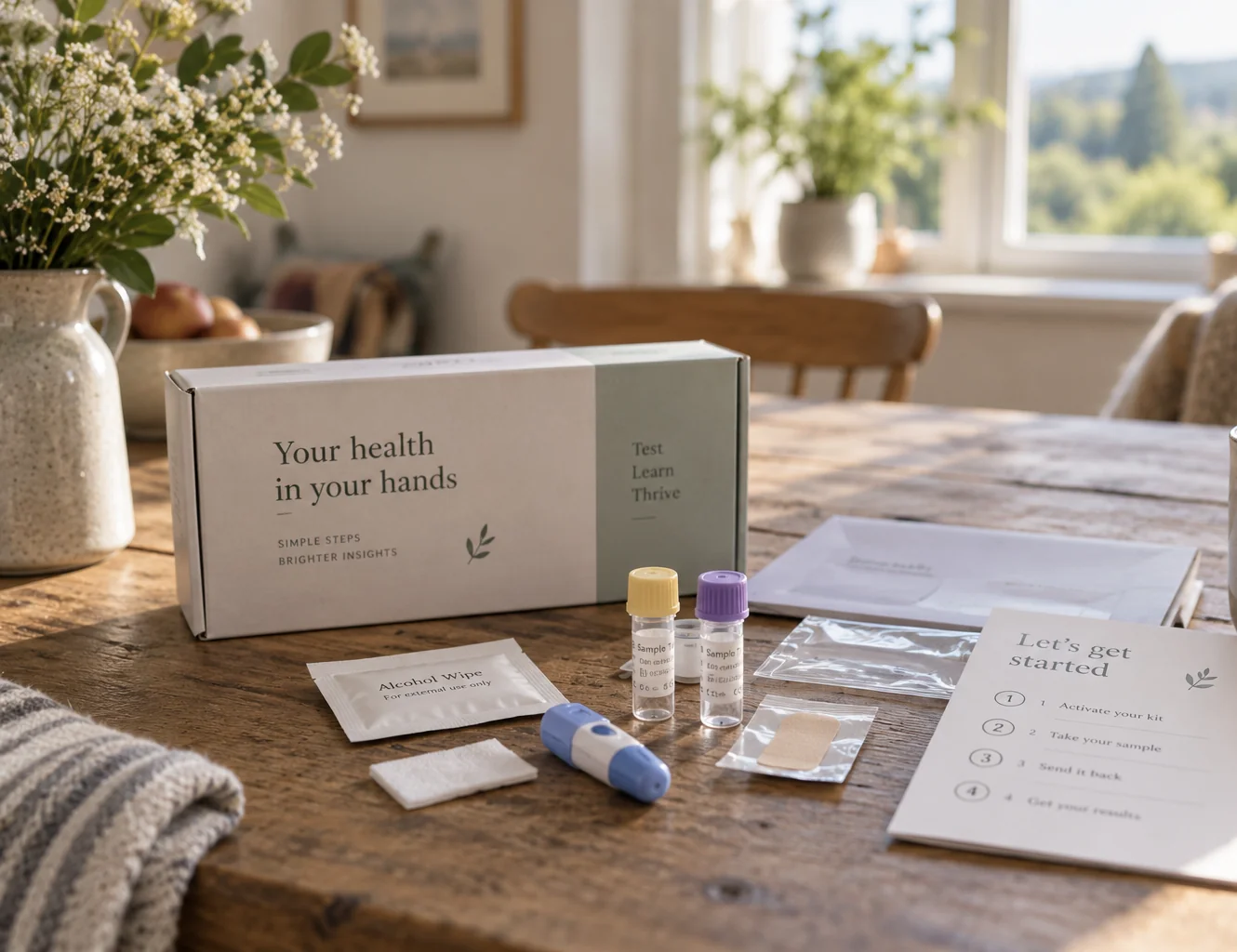
Private health testing has grown fast. Finger-prick kits arrive through the letterbox, pharmacies offer panels over the counter, and practitioners increasingly work with tests that were once the preserve of hospitals. For anyone who has been feeling below par for a while without a clear explanation, the appeal is obvious.
The difficulty is the sheer choice, and the fact that almost nobody explains what any of it is for. Here is a plain guide to what is out there, what it can and cannot tell you, and what to sort out before you spend anything.
Start with what the NHS already covers
A surprising amount is available free, and it is worth exhausting that first. A GP can arrange blood counts, thyroid function, iron studies, vitamin D, blood sugar and cholesterol where there is a reason to look. Everyone aged 40 to 74 in England without a pre-existing condition is invited for a free NHS Health Check every five years, which covers blood pressure, cholesterol and diabetes risk.
If you have symptoms that are bothering you, that conversation is the right first step regardless of what else you go on to do. It is also free, and the results sit in your record where anyone else looking after you can see them.
The main families of private test
Broadly, what practitioners work with falls into a few groups.
Blood panels. The most familiar territory: nutrient levels, thyroid markers, inflammatory markers, blood sugar and cholesterol. Often a broader sweep than a GP would run without a specific reason, which is much of the appeal and also part of the pitfall.
Hormone testing. Usually done through urine or saliva across a full day rather than a single blood draw, on the reasoning that hormones move considerably between morning and evening. Commonly used around perimenopause, cycle difficulties and long-running fatigue.
Gut and stool analysis. Looks at the mix of bacteria present, digestive function and markers of irritation in the gut. This is a fast-moving field and interpretation is genuinely contested, and two labs can present the same sample rather differently.
Nutrient and mineral panels. Blood, urine or hair samples looking at vitamin and mineral status. Hair mineral analysis in particular has its supporters and its sceptics; it is worth knowing that before you order one.
Genetic panels. Look at variations that may affect how you process certain nutrients. They describe tendencies rather than outcomes, and they never change, so there is no urgency about doing one.
"A test result is a snapshot of one morning, not a verdict. What matters is what it is placed next to: your symptoms, your history and the rest of your life."
Where private testing genuinely helps
The people who tend to get most from it are those who have been unwell or below par for a long time, have already been through the NHS route, and want to look more widely than a standard panel allows. It can also be reassuring in the plain sense. Some people simply want to see the numbers.
It is most useful when a practitioner is involved from the start. Choosing the right test for the right question is half the work, and reading the result in the context of the whole person is the other half. A page of figures with red arrows next to them, arriving on its own, is more likely to worry you than help you.
Questions worth asking before you buy
- What specific question is this test answering, and what would I do differently depending on the answer?
- Is this available through my GP first?
- Who is interpreting the result, and is that included in the price?
- Is the laboratory UK-accredited?
- What does the follow-up cost, counting repeat tests, supplements and further appointments?
Prices vary enormously, from around £50 for a single marker to several hundred for a broad panel. Ask about the whole cost of the path you are being offered, not only the first step.
A word of caution
A private result is not a substitute for talking to your GP, and anything that looks concerning belongs in front of a doctor rather than in a search engine. Equally, a normal-looking set of numbers does not mean nothing is going on. Plenty of things that make people feel dreadful do not show up on a panel at all.
Used well, with someone who knows how to read them, tests can take some of the guesswork out of a long-running problem. Used as a shopping list, they can quietly cost a great deal and settle very little.
Welvow includes nutritional therapists, women's health practitioners and pharmacists who work with health testing as part of a broader picture rather than as an end in itself. A short introductory call is the sensible first step. It costs nothing and it is where you find out whether testing is even the right question for you.
Find your practitionerThe most useful thing a test can do is narrow a question that had become too big to hold. That is worth having. It is worth having with someone alongside you who can tell you what the numbers mean, and, just as often, what they do not.