Across almost every herbal tradition in temperate climates, autumn has been understood as the time to strengthen the body's defences. The shift from outdoor warmth to indoor cold, from abundant summer food to stored winter provisions, was always marked by deliberate preparations – soups made with immune herbs, tinctures started, preserves laid down. This seasonal wisdom has not become less relevant; if anything, the understanding of why it works has deepened considerably.
Western Autumn Herbs
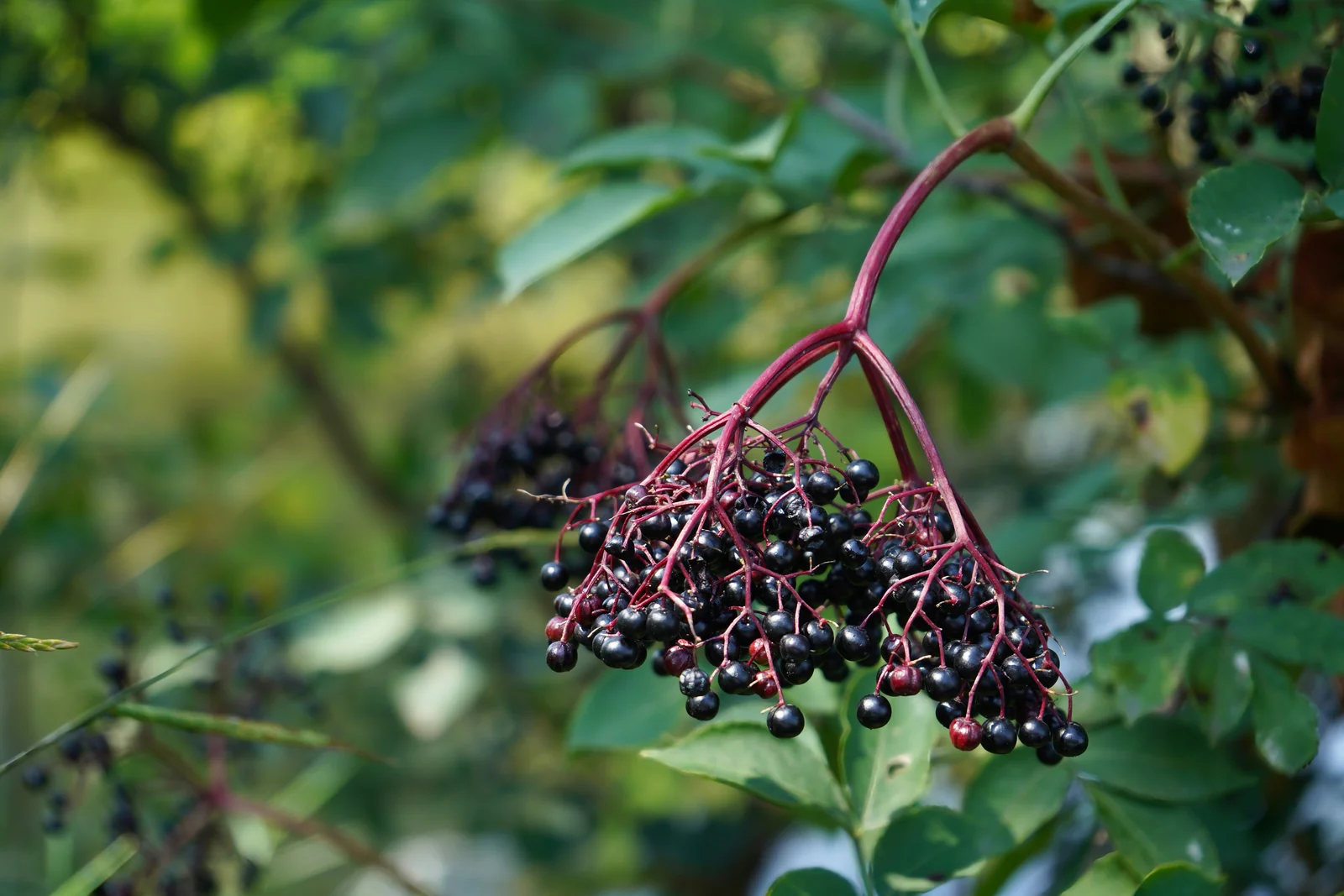
Elderberry (Sambucus nigra) is perhaps the best-evidenced Western herb for immune support in the cold and flu season. Clinical research has found that elderberry extracts may shorten the duration of colds and flu, and may have direct antiviral activity. The berries ripen in early to mid-autumn – making this the ideal time to make elderberry syrup, one of the most pleasurable and practical seasonal herbal preparations. Combined with honey, ginger, and cinnamon, elderberry syrup taken daily through autumn and winter is one of the most deeply traditional and genuinely effective immune preparations available.
Echinacea (Echinacea purpurea/angustifolia) is one of the most widely used herbs for immune support, with a substantial body of evidence supporting its use for reducing the severity and duration of upper respiratory infections. There is ongoing debate about whether echinacea is best taken preventatively (continuously through autumn and winter) or at the first signs of a cold – most herbalists recommend the latter. Available as a tincture, capsule, or tea.
Thyme (Thymus vulgaris) is one of the great respiratory herbs of the Western tradition – antimicrobial, antispasmodic, and expectorant. Thyme tea or tincture is used for coughs, bronchitis, and respiratory infections; it's one of the herbs with the strongest evidence base for respiratory support in the herbal tradition. Thyme is also very easy to grow and can be used liberally in autumn cooking, where it adds depth to roasted vegetables, soups, and stews while also being genuinely medicinal.
Oregano is strongly antimicrobial – oregano essential oil in particular has documented activity against a range of respiratory pathogens. Fresh or dried oregano used generously in cooking is a pleasurable way to incorporate this herb, and oil of oregano supplements are popular (though potent and best used when actually unwell rather than as a daily tonic).
Mullein (Verbascum thapsus) is a specific Lung herb in Western herbalism – it soothes and supports the respiratory mucous membranes, helps clear congestion, and is used for chronic respiratory conditions including dry cough and bronchitis. The large, woolly leaves make an excellent tea for respiratory complaints.
TCM Autumn Herbs
Huang Qi (Astragalus) is one of the most important TCM herbs for building Wei Qi (defensive Qi) – the body's immune defence. It is specifically used in TCM for immune deficiency patterns, recurrent infections, and fatigue. Astragalus is a tonic herb – meaning it is most effective when taken over a period of weeks or months, making autumn the ideal time to begin a course. It can be added directly to soups and stews during cooking (the dried root slices are easily available), making it one of the most practical dietary-supplement herbs in TCM. It has a mild, slightly sweet flavour that suits long-cooked dishes well.
Bei Sha Shen (Coastal Glehnia root) is used in TCM specifically to nourish Lung Yin and address the dryness that autumn brings. It is moistening, gentle, and appropriate for dry throat, dry cough, and the kind of parched feeling that autumn's dry air and central heating can produce. Usually taken as part of a formula prescribed by a TCM practitioner.
Mai Men Dong (Ophiopogon) nourishes Lung and Stomach Yin – another key moistening herb for autumn dryness. Often combined with Bei Sha Shen in classical autumn formulas. Available in specialist TCM dispensaries or as part of prepared formulas.
Yu Ping Feng San – translated as "Jade Windscreen Powder" – is one of the most famous TCM formulas for Wei Qi deficiency and recurrent respiratory infections. It is composed of Huang Qi (Astragalus), Bai Zhu (White Atractylodes), and Fang Feng (Siler root). The name refers to its action: creating a protective screen against the Wind pathogens that TCM associates with cold and flu. It is widely used in Chinese medicine as an autumn immune tonic and is available as a prepared formula in many health food shops and online.
Practical Autumn Herbal Habits
- Elderberry syrup – made or bought in early autumn; a daily spoonful through the cold season is pleasurable and genuinely supportive
- Astragalus in soups – add dried astragalus root slices to any long-cooked soup or bone broth; remove before serving
- Thyme tea or tincture – at the first signs of a respiratory complaint; or used daily in cooking as a food-herb
- Ginger and honey in warm water – warming, antimicrobial, and deeply appropriate for autumn; a simple daily morning ritual
- Yu Ping Feng San formula – taken as a daily tonic through autumn for those who tend to get repeated colds; ideally under guidance from a TCM practitioner