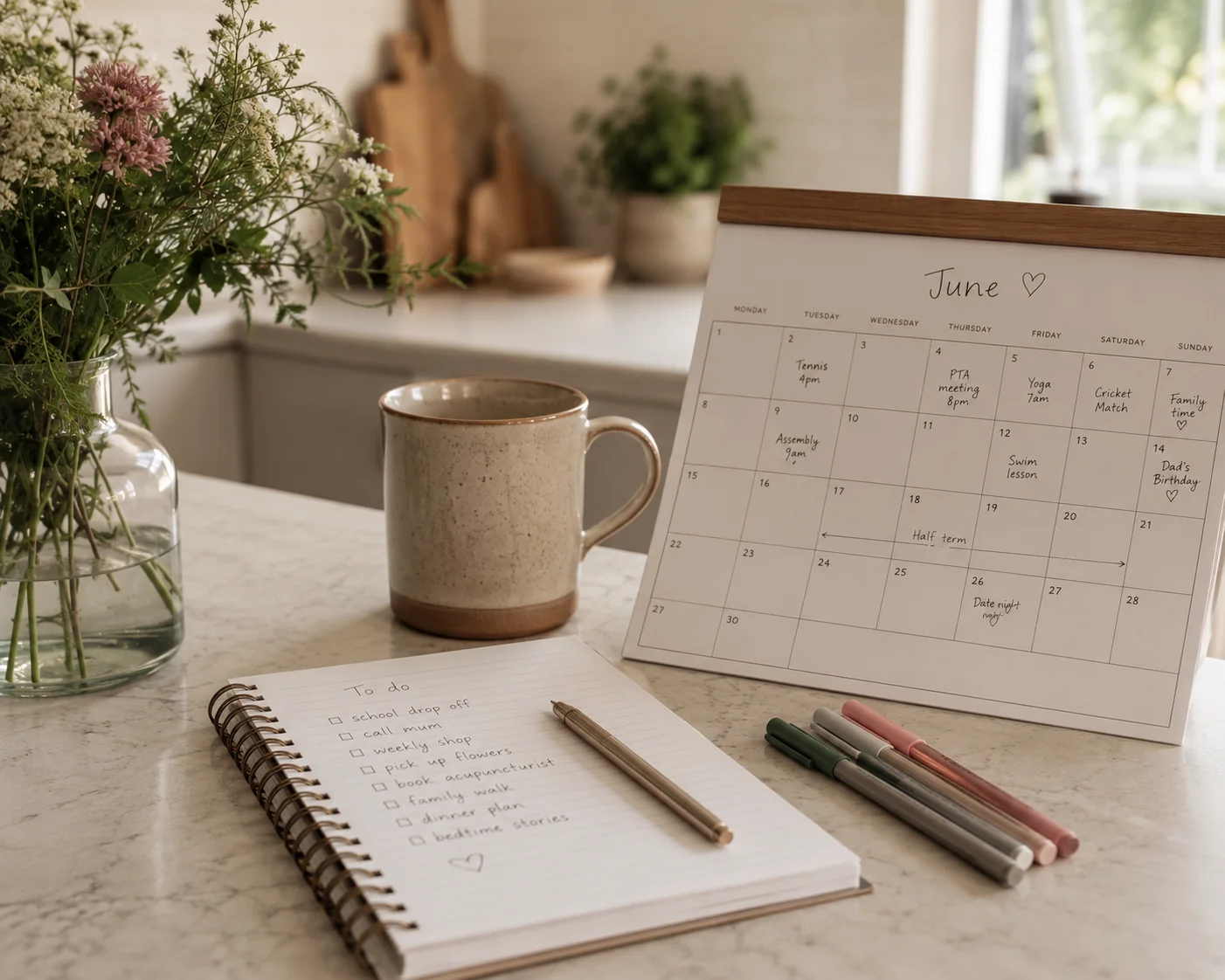
You tick something off your list, and another thing appears at the bottom. Then something more urgent comes in and jumps straight to the top, the list which never seems to go down. You don’t have time to take stock, as you already ‘know’ that for even the easy small things on the list there will be something that goes wrong or complicates it and turns it into three jobs.
Work, personal relationships, health, responsibilities, everything seems to be vying for your time and attention. You might be managing all of it, but where are you on that list, do you even feature at all?
I’ve found this a useful starting point with clients when thinking about anxiety and overwhelm. It is important to reflect on what happens when your life starts to feel like one long to-do list. Your own priorities never quite make it to the top, and it becomes unclear who is actually in control of what goes on that list.
When you feel out of control
Anxiety can involve worry about what’s coming next. Will I manage? Am I capable? What if something goes wrong? It can also involve dwelling on the past, and sometimes there isn’t an obvious trigger.
Overwhelm is often downhill from that point. It can feel like too much to manage and too much competing for your attention. You’re constantly fighting fires, being pulled in different directions, constantly bouncing from one (seemingly) important thing to the next. You’re getting through the day, but it feels as though the day is deciding everything for you. The world is happening to you, rather than you imposing yourself on the world.
Anxiety and overwhelm can overlap sometimes; they often don’t follow a set sequence. But whether you recognise worry, overload or both, it’s worth looking at the pressures you’re facing and the expectations you place on yourself.
The “shoulds” and “musts”
If being useful, taking responsibility and adding value matter to you, consider whether any of these thoughts sound familiar:
- “I should be able to cope.”
- “I must be able to do this.”
- “I can’t let anyone down.”
Some men may recognise that expectation to be the person who manages, who takes charge, who others can rely on. You pride yourself on being dependable and useful. Perhaps proving your worth has become tied to how much you do for everyone else.
Wanting to help others can be an important part of who you are.
In my cognitive behavioural hypnotherapy and coaching work, these are the kinds of beliefs I explore. Consider what being dependable means to you, and whether it prevents you from asking for help when you need it.
Consider one of your own “shoulds” and evaluate whether it is realistic. Look at the evidence supporting it, think about what you would say to a friend in the same position, and identify any evidence to the contrary. Give yourself space to look at it from the bird’s-eye point of view, not your automatic response.
A couple of questions I find useful are: what would it mean to ask for help? What would it mean if you said no to something which is not important to you? The answer might tell you something about the rules you’re trying to live by.
What can you actually control?
These self-imposed rules often creep into things which we cannot dictate. You cannot control how the company you work for is doing, every request that comes in, other people’s choices, what other people think, or how other people manage their own life.
You may have some influence of course, but you can’t determine the outcome of everything. A more helpful focus is to look instead at where you have room to make a decision. Where can you wrestle back control?
Outside events and people are rarely in your control; what you can ultimately control is how you respond to them. You won’t always be able to choose how you feel. But there may be something you can change about how you respond, what you take on or where you seek support.
Taking back some control can start there.
Find one decision that can give you some space of your time and focus. Find something, however small, to snatch back the steering wheel from life happening to you.
That might be ten minutes to stop and think (without your phone), a short walk, breathing exercises, sports or art, self-hypnosis or meditation. Or a conversation you’ve been putting off about what is actually manageable.
Consider how your priorities might shift if caring for yourself was given a meaningful place on that list. From there, work backwards to determine what needs to change in your day to make it happen.
You don’t need to wait until you’re struggling with everything before asking for support. If anxiety or overwhelm is affecting your daily life, speak with your GP, or one of the many great therapists at Welvow.
Welvow includes hypnotherapists, CBT practitioners, counsellors and coaches who work with anxiety, overwhelm and work stress, including Peter Jacobs. Most offer a short introductory call, which is the easiest way to ask how they work before committing to anything.
Find your practitionerWith the nature of modern life, there will still be things to do, but deciding to take back the power of what you focus on and including some time for yourself will help you to feel more in control again.